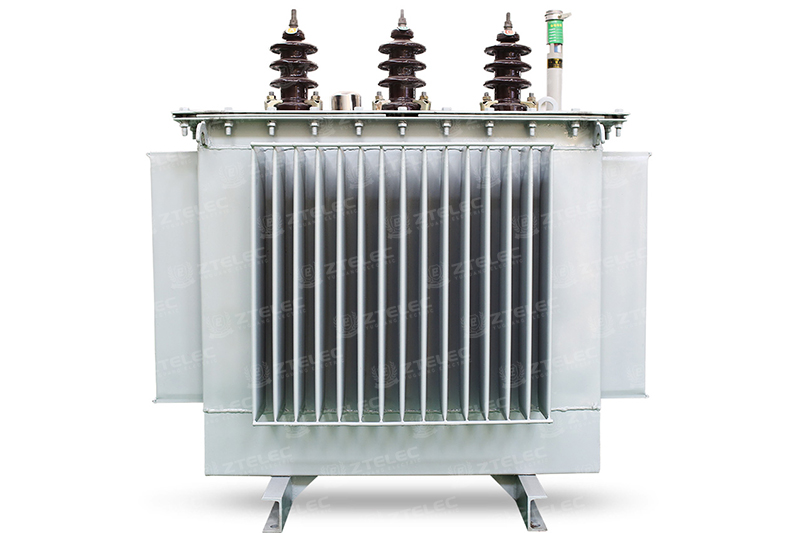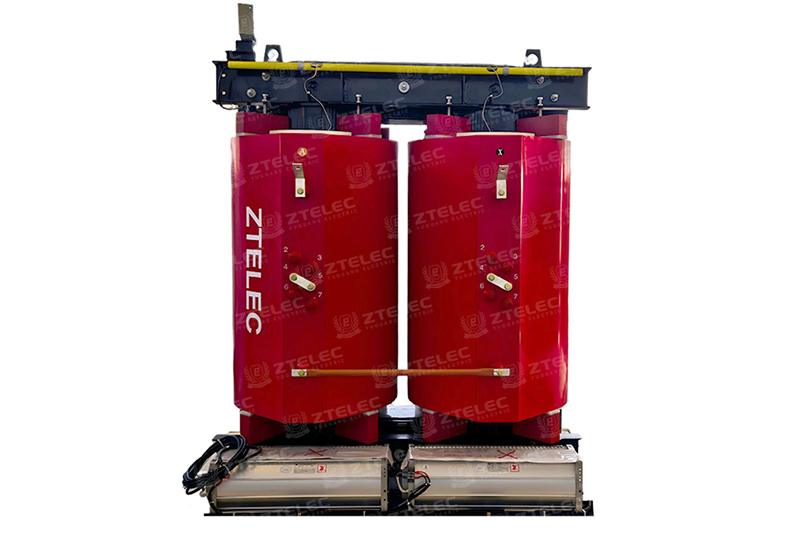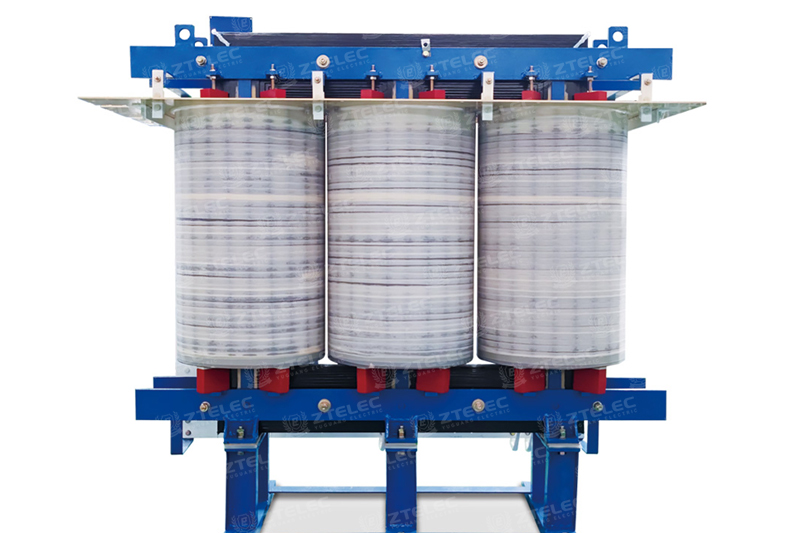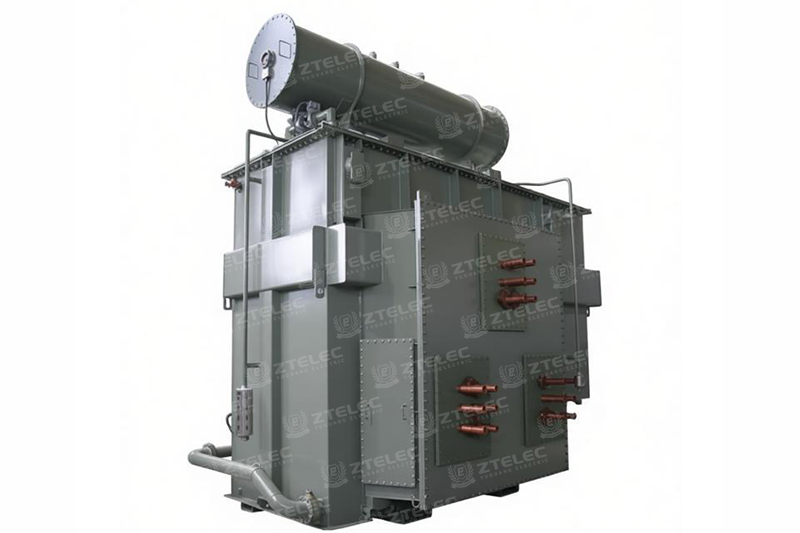

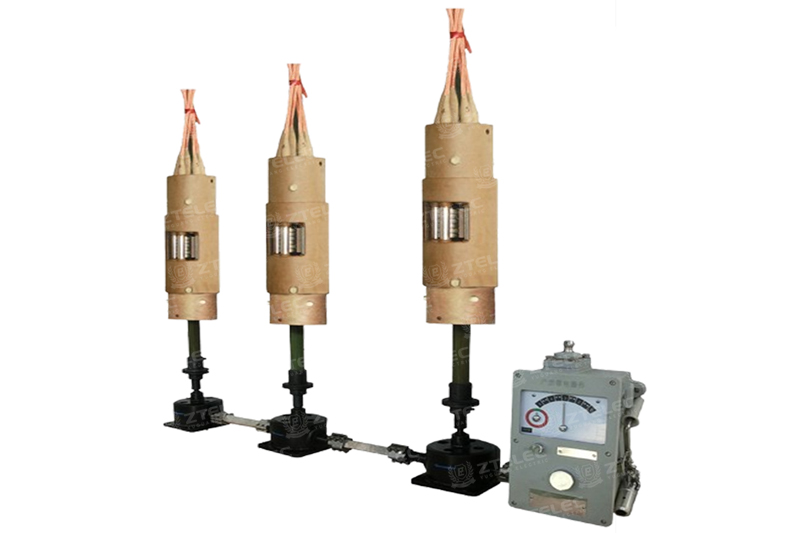
High quality Non-Excitation Tap Changer (NETC) for oil-immersed and dry-type transformers. Reliable off-circuit voltage regulation for distribution, industrial, and power transformers up to 220kV.
| Rated voltage | Up to 220 kV |
|---|---|
| Application scenarios | Oil-immersed & Dry-type Transformers |
A Non-Excitation Tap Changer (NETC), also known as an Off-Circuit Tap Changer (OCTC) or De-Energized Tap Changer (DETC), is a voltage regulation device used in power transformers to adjust the turns ratio only when the transformer is completely de-energized and isolated from the power network.
By selecting different tap positions on the high-voltage or low-voltage winding, operators can regulate transformer output voltage, compensate for long-term grid voltage fluctuations, adapt to network reconfiguration, and maintain stable system performance.
Our NETC product range covers both dry-type transformers and oil-immersed transformers, from distribution transformers to transmission-class power transformers up to 220kV. Customized tap ranges, step sizes, mounting methods, and special configurations are available for standard and non-standard applications.
Transformer windings are divided into multiple sections called taps. Each tap corresponds to a specific number of winding turns and therefore a specific voltage ratio. The NETC connects the transformer circuit to one selected tap position through a rotary or linear contact mechanism.
Because the tap changer operates only when the transformer is fully de-energized, there is no load current interruption and no arc generation during switching. This greatly reduces contact wear, extends mechanical life, and allows for a simpler, more compact, and more economical design compared to On-Load Tap Changers (OLTC).
Tap adjustment is performed manually using an external operating handle or shaft. The selected tap position is mechanically locked and clearly indicated before the transformer is returned to service.
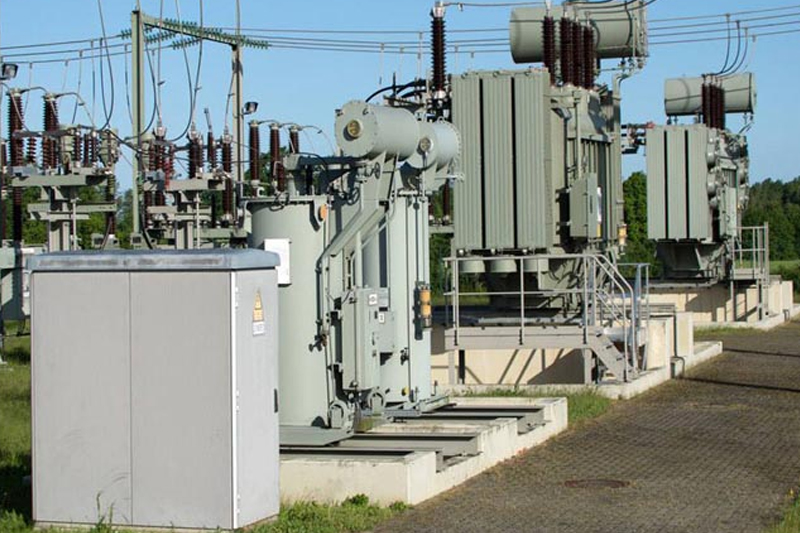
Oil-immersed NETCs are mounted directly on the transformer tank cover or integrated into the transformer active part. The switch body operates inside transformer oil, which provides both insulation and cooling for the contact system.
The rotary switch structure uses spring-loaded contact pressure to ensure reliable electrical continuity. All current-carrying parts are made of copper or copper alloy, and high-current models use silver-plated contact surfaces for improved conductivity and corrosion resistance.
The oil-tight sealed housing eliminates external oil leakage paths and reduces maintenance requirements. External operating handles include mechanical position indicators and padlock provisions for operational safety.
Available configurations include neutral-end tap switching, line-end tap switching, phase-isolated operation, and three-phase gang operation using a single shaft.
Voltage range: up to 220kV (Um)
Current range: up to 1600A rated through-current
Standard tap positions: ±2×2.5% and ±4×2.5%, with custom ranges available
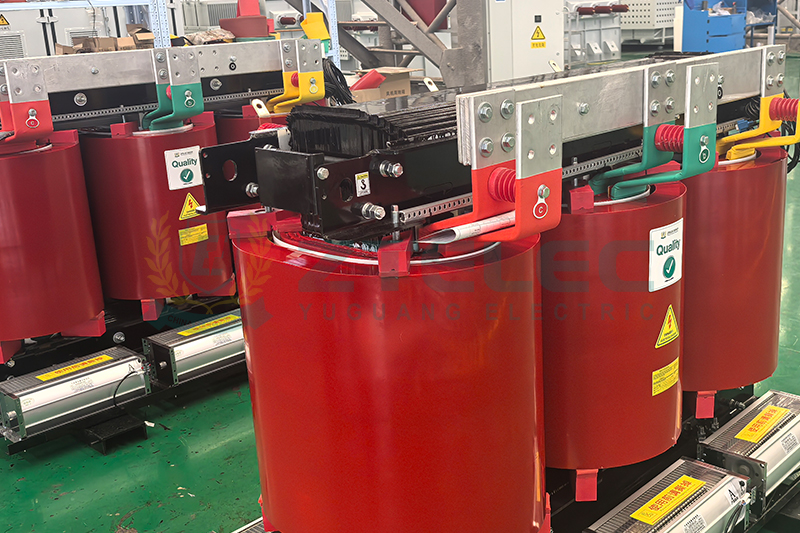
Dry-type NETCs use air insulation and are mounted externally on transformer enclosures or coil clamping structures. The fully enclosed design protects against dust and moisture and is suitable for indoor dry-type transformer installations.
The compact body is designed for easy integration into transformer enclosure panels. Air-insulated rotary contacts are rated according to the required voltage class, while external position indicators allow quick visual verification without opening the enclosure.
Available for high-voltage tap positions on 6kV, 10kV, and 35kV dry-type transformers, these units require low operating torque and can be manually adjusted by a single operator without special tools.
Voltage range: up to 35kV
Current range: up to 630A
Standard tap positions: ±2×2.5% and ±4×2.5%
Since the NETC performs switching only when the transformer is disconnected from the power supply, the contact system experiences virtually no arc erosion. Mechanical life typically exceeds 10,000 operations, and maintenance requirements remain very low.
All main contacts are silver-plated on copper alloy substrates. This ensures low contact resistance, excellent corrosion resistance, and stable transition resistance throughout decades of service life.
Each tap position is securely locked by a mechanical detent system before the operator releases the handle. Undefined or intermediate positions cannot be engaged, preventing dangerous off-step contact conditions.
Tap position numbers are permanently marked on the external indicator plate. Operators can confirm the current position without opening covers or accessing oil compartments, simplifying inspection and commissioning.
The operating shaft includes a padlock locking point to prevent unauthorized or accidental tap adjustment, meeting utility and industrial site safety requirements.
Standard tap ranges such as ±2×2.5% (5 positions) and ±4×2.5% (9 positions) cover most applications. Custom solutions including ±5%, ±8×1.25%, unequal step sizes, and extended position counts are available according to transformer design requirements.
| Parameter | Oil-Immersed Type | Dry-Type |
|---|---|---|
| Applicable Transformer | Oil-immersed, up to 220kV | Dry-type, up to 35kV |
| Rated Voltage (Um) | 7.2 / 12 / 24 / 40.5 / 72.5 / 126 / 252 kV | 7.2 / 12 / 40.5 kV |
| Rated Current | 100A – 1600A | 100A – 630A |
| Standard Tap Range | ±2×2.5% / ±4×2.5% | ±2×2.5% / ±4×2.5% |
| Number of Positions | 3, 5, 7, 9 or customized | 3, 5, 7, 9 or customized |
| Insulation Medium | Transformer Oil | Air |
| Contact Material | Silver-plated Copper Alloy | Silver-plated Copper Alloy |
| Operating Mode | Manual External Handle | Manual External Handle |
| Mechanical Life | ≥ 10,000 Operations | ≥ 10,000 Operations |
| Contact Resistance | ≤ 300 μΩ | ≤ 500 μΩ |
| Operating Temperature | -25°C to +105°C | -25°C to +40°C |
| IP Rating | IP55 | IP54 |
| Phase Configuration | Single-phase / Three-phase Gang | Single-phase / Three-phase Gang |
| Standard | Scope |
|---|---|
| IEC 60214-1 | Tap-changers requirements and testing |
| IEC 60076-1 | Power transformers general requirements |
| GB/T 10229 | Chinese national standard for reactor and tap changer components |
| IEEE C57.131 | North American transformer tap changer requirements |
| IEC 60296 | Insulating mineral oils for transformers |
All NETC units undergo strict factory testing before shipment, including contact resistance testing at every tap position, insulation resistance measurement, and power frequency withstand voltage verification.
Selecting the correct tap range depends on the expected long-term voltage variation at the transformer high-voltage terminals.
| Grid Voltage Variation | Recommended Tap Range | Positions |
|---|---|---|
| ±5% | ±2×2.5% | 5 |
| ±10% | ±4×2.5% | 9 |
| ±10% Unequal | Custom Step Size | As Required |
| > ±10% | ±8×1.25% or Custom | 9–17 |
For seasonal voltage regulation applications such as irrigation systems and renewable energy substations, a 9-position or wider tap changer provides excellent flexibility without the higher cost of an OLTC.
Utility distribution substations use NETCs in 10kV, 35kV, and 110kV transformers where long-term voltage conditions remain relatively stable.
Industrial plants use NETCs in factory main transformers where output voltage is set during commissioning and adjusted only during scheduled maintenance shutdowns.
Renewable energy substations use seasonal tap adjustment for wind farm and solar farm step-up transformers.
Mining projects and remote installations benefit from NETCs where voltage adjustment is only needed during planned outages.
Replacement and retrofit projects use custom NETCs reverse-engineered from original units for direct installation and full compatibility.
| Factor | NETC | OLTC |
|---|---|---|
| Switching Condition | De-energized Only | Under Full Load |
| Adjustment Frequency | Seasonal or Annual | Continuous / Automatic |
| Maintenance | Very Low | Regular Service Required |
| Cost | Much Lower | 3–10 Times Higher |
| Best For | Stable Voltage Networks | Continuous Voltage Regulation |
For most distribution and industrial transformers where voltage adjustment is performed only during planned shutdowns, the NETC is the technically correct and more economical solution.
To provide accurate quotation and technical matching, please supply transformer type, rated voltage, Um class, rated through-current, required tap range, step size, number of tap positions, phase configuration, mounting location, and any special design requirements.
For retrofit projects, the existing NETC nameplate data along with a dimensional drawing or mounting photo is sufficient for confirming direct replacement compatibility.
For technical consultation, replacement projects, or custom specifications, please send us your transformer nameplate data or existing NETC part number. Our engineering team will verify compatibility and provide a detailed quotation within 2 business days.

ZTELEC Yuguang Electric Technology, founded in 2014, builds on state-owned industrial expertise to deliver reliable power solutions worldwide.
Copyright © 2026.ztygelectric All rights reserved.