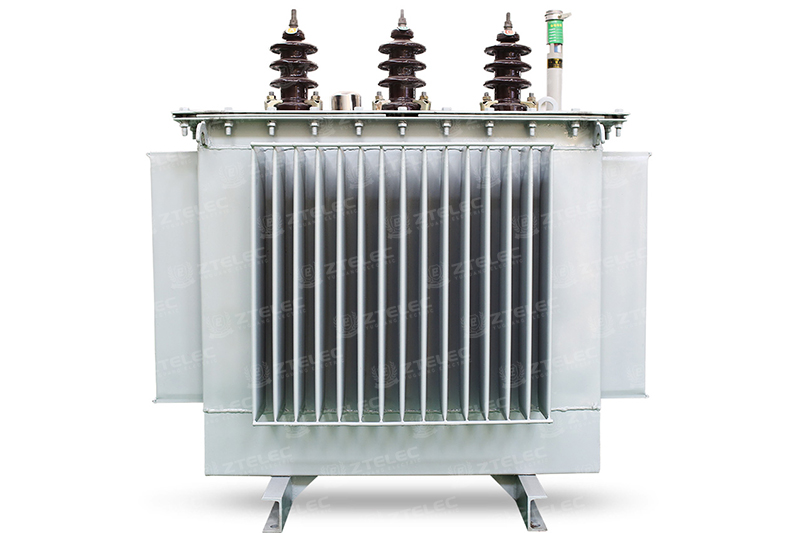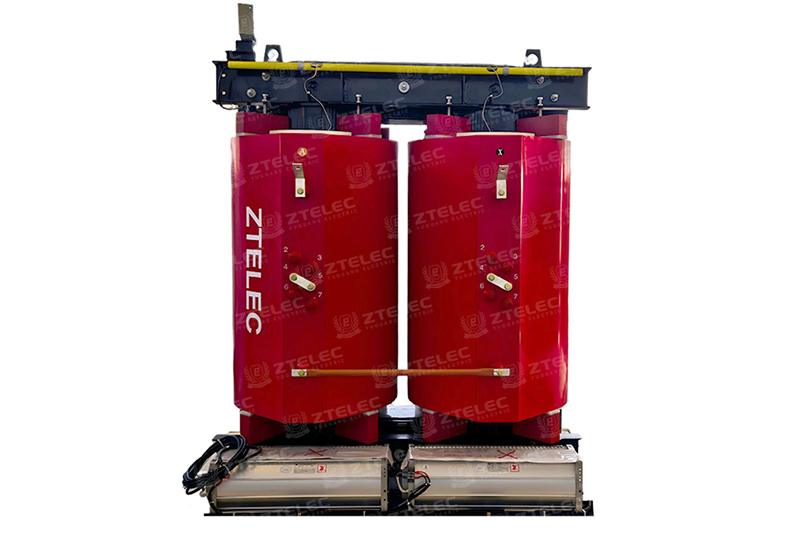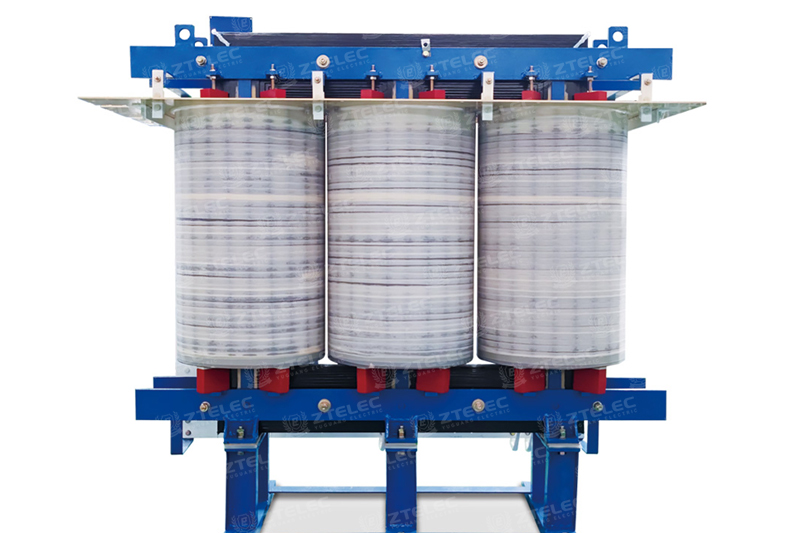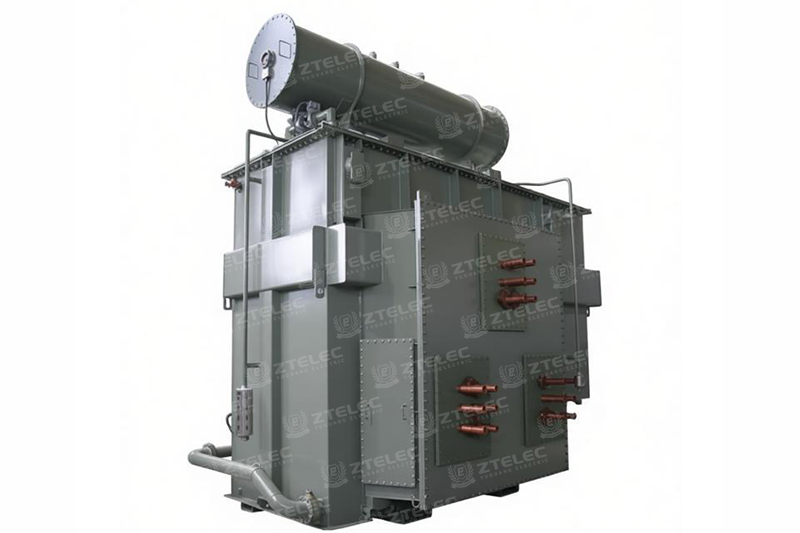

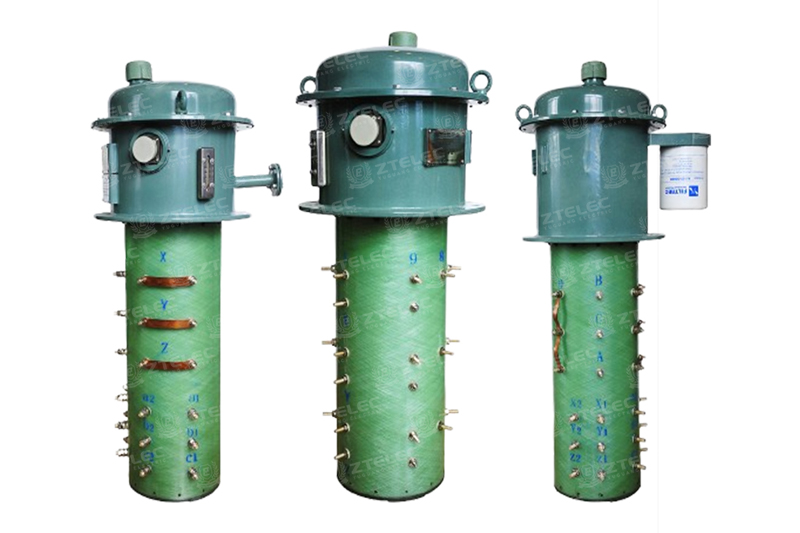
High-performance On-Load Tap Changer (OLTC) for oil-immersed and dry-type transformers. Reliable automatic voltage regulation for power transformers up to 220kV with AVR compatibility and vacuum interrupter technology.
| Rated voltage | Up to 220 kV |
|---|---|
| Application scenarios | Power & Distribution Networks Distribution Transformers Industrial Transformers Renewable Energy & Smart Grids Indoor & Dry-Type Transformers |
An On-Load Tap Changer (OLTC), also known as a Load Tap Changer (LTC), is the core voltage regulation device of a power transformer. Unlike off-circuit tap changers that require complete transformer shutdown before adjustment, an OLTC changes tap positions while the transformer remains energized and carrying full load.
This continuous voltage regulation capability ensures stable transformer output voltage despite grid voltage fluctuations, seasonal load variation, industrial load changes, and renewable energy generation instability. OLTC is widely used in utility substations, industrial plants, renewable energy projects, smart grid systems, and large commercial facilities.
Our OLTC product range covers both oil-immersed transformers and dry-type transformers, from distribution transformers to transmission-class power transformers up to 220kV. Multiple tap ranges, switching technologies, motor drive options, and customized configurations are available for global power system applications.
Voltage regulation is achieved by changing the number of active turns in the transformer winding. Selecting a different tap position changes the turns ratio and therefore adjusts the output voltage. The key challenge is performing this switching without interrupting load current.
The OLTC solves this using a two-stage switching system consisting of a tap selector and a diverter switch.
The tap selector first pre-selects the target tap position without carrying load current. While this happens, the diverter switch continues carrying the full load current through the existing tap position.
The diverter switch then transfers the load current from the old tap to the new tap through a rapid switching operation, usually completed within 40 to 70 milliseconds. During this transfer, a transition resistor temporarily bridges both taps to limit circulating current caused by voltage differences between tap positions.
In vacuum-type OLTC systems, the interruption occurs inside hermetically sealed vacuum interrupters instead of transformer oil, eliminating arc contamination and significantly extending service life.
The Motor Drive Unit (MDU) stores mechanical energy using a spring-charged mechanism and releases it in one fast action, ensuring consistent switching speed regardless of supply voltage conditions.
Resistor-type OLTC is the standard solution for oil-immersed power transformers and distribution transformers. The diverter switch operates either inside transformer oil or in a separate oil compartment, using transition resistors to control circulating current during tap transfer.
In the conventional type, contacts make and break current directly inside insulating oil. This is a proven and widely used technology with a long operating history in utility and industrial applications.
It requires periodic oil testing, contact inspection, and scheduled maintenance to ensure reliable long-term performance.
In vacuum OLTC designs, current interruption takes place inside sealed vacuum interrupters. This prevents arc products from contaminating the transformer oil, greatly reduces contact wear, and supports maintenance-free operation exceeding 300,000 switching cycles.
Vacuum type OLTC is ideal for high-duty transformers, remote substations, renewable energy projects, and installations requiring extended maintenance intervals.
Voltage range: up to 220kV (Um = 252kV)
Rated through-current: up to 1500A single-phase and up to 600A three-phase neutral point
Maximum tap positions: up to 35 positions with changeover selector
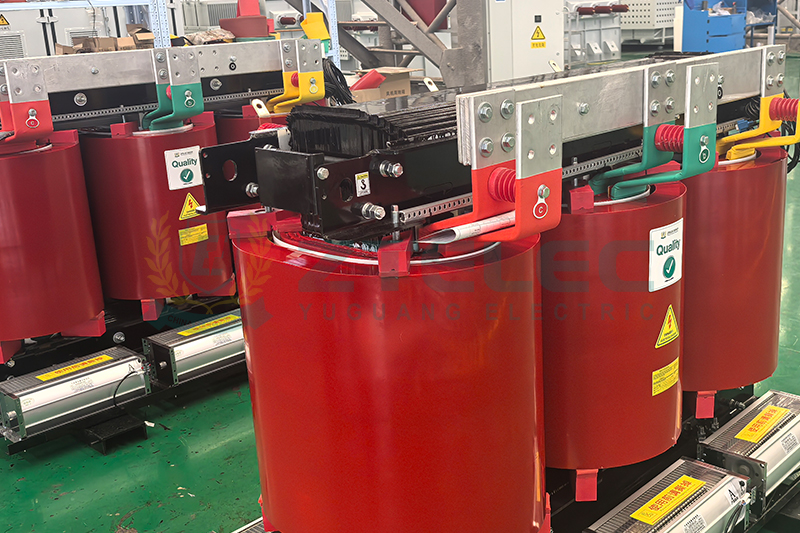
Dry-type transformers do not use oil, so vacuum interrupter technology is the standard solution for on-load voltage regulation. Vacuum OLTC uses sealed vacuum interrupters as the only arc interruption medium in air-insulated transformer systems.
Single-phase construction allows flexible application in star, delta, and zigzag winding connections. For three-phase dry-type transformers, three single-phase units are mechanically linked and operated by one shared motor drive unit.
The fully enclosed design protects against moisture, dust, and airborne contamination, making it ideal for indoor switchgear rooms, industrial enclosures, and commercial electrical rooms.
The compact structure integrates directly into the transformer enclosure and supports both local and remote control through standard interfaces.
Voltage range: up to 35kV
Rated through-current: up to 630A
Maximum tap positions: up to 17 positions
Tap change operation is completed within 40 to 70 milliseconds using a pre-charged spring mechanism. This high speed minimizes transition resistor heating, reduces thermal stress, and ensures uninterrupted power supply to connected equipment.
Our vacuum interrupters are specifically designed for OLTC applications rather than adapted from circuit breaker products. Contact geometry, bellows design, and switching characteristics are optimized for repetitive low-energy voltage regulation duty.
Mechanical life reaches 1,500,000 operations, while electrical life exceeds 500,000 operations at rated current.
The diverter switch operates inside a separate sealed oil compartment isolated from the main transformer tank. This prevents carbon particles, arc products, and moisture from contaminating the main transformer insulation oil.
Each OLTC includes a matched Motor Drive Unit with reversible motor, spring charging mechanism, control relays, tap position indicator, limit switches, and manual emergency operation handle.
The MDU supports simple integration with external Automatic Voltage Regulators (AVR), SCADA systems, and building management systems.
The OLTC control interface is designed for direct connection to AVR systems. AVR automatically monitors secondary voltage and issues raise or lower commands to maintain output voltage within a preset control range without operator intervention.
Oil-immersed OLTC units are equipped with Buchholz relay protection installed between the diverter switch conservator and the main conservator. This detects gas accumulation caused by internal faults and provides alarm and trip protection before major failure occurs.
| Parameter | Oil-Immersed OLTC | Dry-Type OLTC |
|---|---|---|
| Transformer Type | Oil-immersed | Dry-type |
| Highest Voltage Um | 12 / 24 / 40.5 / 72.5 / 126 / 170 / 252 kV | 12 / 24 / 40.5 kV |
| Max Rated Current (3Φ) | Up to 600A | Up to 630A |
| Max Rated Current (1Φ) | Up to 1500A | Up to 400A |
| Switching Time | 40–70 ms | 40–70 ms |
| Transition Resistor | Yes | Yes |
| Arc Interruption Medium | Oil or Vacuum | Vacuum |
| Max Tap Positions | 35 | 17 |
| Standard Tap Range | ±8×1.25% / ±9×1.11% | ±4×2.5% |
| Motor Drive Voltage | AC 110V / 220V; DC 110V / 220V | AC 110V / 220V |
| MDU Protection Rating | IP55 | IP54 |
| Mechanical Life | ≥ 1,500,000 operations | ≥ 1,500,000 operations |
| Electrical Life | ≥ 500,000 operations | ≥ 300,000 operations |
| Applicable Standard | IEC 60214-1, GB/T 10230 | IEC 60214-1, GB/T 10230 |
| Standard | Scope |
|---|---|
| IEC 60214-1 | On-load tap changers requirements and testing |
| IEC 60214-2 | Application guide for tap changer selection |
| IEEE C57.131 | North American tap changer requirements |
| GB/T 10230 | Chinese national standard for on-load tap changers |
| IEC 60076-1 | Power transformer general requirements |
| IEC 60076-7 | Loading guide for liquid-immersed transformers |
All OLTC units undergo complete factory testing before shipment, including contact resistance testing, operation sequence verification, insulation resistance measurement, power frequency withstand voltage testing, and full MDU functional verification.
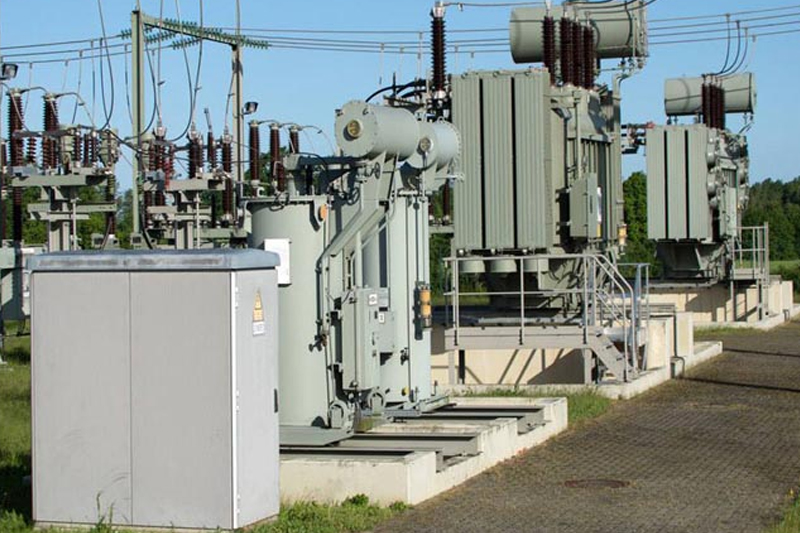
Utility substations use OLTC-equipped transformers in 10kV, 35kV, 110kV, and 220kV systems where output voltage must remain stable throughout daily load fluctuations.
Industrial plants such as steel mills, chemical plants, data centers, and manufacturing facilities rely on OLTC regulation to stabilize bus voltage under rapidly changing heavy loads.
Renewable energy projects including solar farms and wind farms use OLTC transformers to maintain voltage at the point of common coupling as generation output changes with weather conditions.
Smart grid systems with distributed generation, EV charging stations, and variable industrial demand use OLTC for remote voltage regulation and SCADA-integrated control.
Special transformers such as rectifier transformers, furnace transformers, phase-shifting transformers, and traction transformers also require OLTC for precise voltage control.
| Factor | OLTC | NETC |
|---|---|---|
| Adjustment Under Load | Yes | No |
| Regulation Frequency | Continuous / Automatic | Seasonal / Planned Shutdown |
| AVR Integration | Standard | Not Applicable |
| Maintenance | Scheduled Service Required | Very Low |
| Initial Cost | Higher | Lower |
| Best Application | Automatic Voltage Regulation | Stable Networks |
For applications requiring continuous voltage control and automatic regulation, OLTC is the correct engineering solution. For stable systems requiring only occasional adjustment, NETC may be more economical.
To configure the correct OLTC model, please provide transformer type, highest voltage class, rated current, tap range, tap step size, number of positions, preferred contact technology, motor drive voltage, control mode, and any special environmental or installation requirements.
For retrofit projects, existing OLTC nameplate data and transformer tank cover drawings are sufficient to verify direct replacement compatibility.
Send your transformer specification or current OLTC nameplate data to our engineering team. We will confirm the correct OLTC model, matching Motor Drive Unit configuration, and provide a detailed quotation within 2 business days.

ZTELEC Yuguang Electric Technology, founded in 2014, builds on state-owned industrial expertise to deliver reliable power solutions worldwide.
Copyright © 2026.ztygelectric All rights reserved.