

Copper oil-filled transformers combine the high electrical and thermal conductivity of copper windings with the insulation and cooling capabilities of transformer oil. This configuration is widely used in power generation, industrial facilities, utility distribution, renewable energy projects, commercial buildings, and other applications where reliable electrical performance is essential.
Compared with aluminum windings, copper windings offer lower electrical resistivity, high mechanical strength, and excellent thermal conductivity. When combined with an oil-immersed insulation and cooling system, copper winding transformers can provide efficient heat management, stable operation, and long-term reliability.
This guide explains how copper oil-filled transformers work, their major advantages, common applications, copper versus aluminum winding considerations, cooling methods, maintenance requirements, and the key factors buyers should evaluate when selecting a transformer.
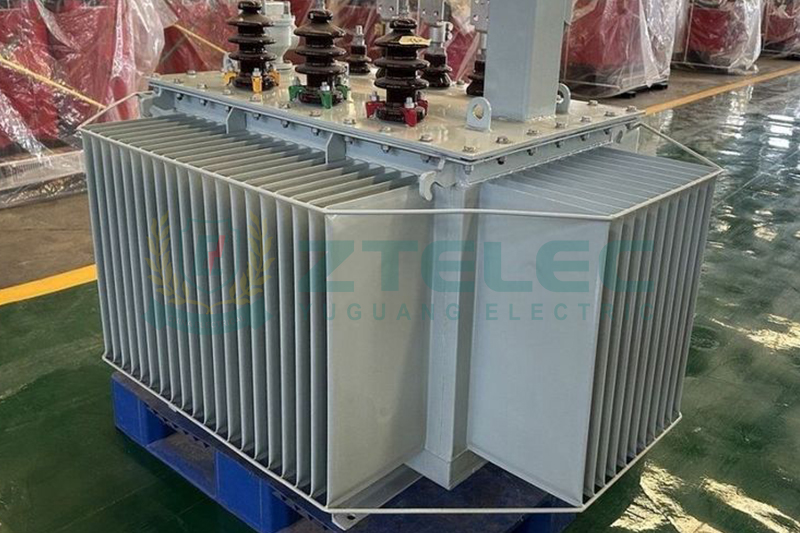
A copper oil-filled transformer is an oil-immersed power or distribution transformer that uses copper conductors for its primary and secondary windings. Transformer oil provides electrical insulation and transfers heat from the windings and magnetic core to the cooling surfaces of the transformer tank.
The combination of copper windings and oil immersion makes this type of transformer suitable for applications requiring reliable power conversion, effective thermal management, and long-term operating stability.
Depending on the application, copper oil-filled transformers can be manufactured with different rated capacities, primary and secondary voltage levels, vector groups, impedance values, tap-changing arrangements, and cooling configurations.
Copper Windings: Copper conductors are used for the high-voltage and low-voltage windings. Copper provides high electrical conductivity and good mechanical strength, making it suitable for transformer winding applications.
Transformer Core: The magnetic core is generally manufactured from laminated electrical steel. Its design minimizes core losses and provides an efficient magnetic path between the windings.
Insulating Oil: Transformer oil provides dielectric insulation while transferring heat generated by the core and windings to the cooling system.
Transformer Tank: The tank contains the core, windings, and insulating oil. Its mechanical design must withstand operating pressure, environmental conditions, and transportation requirements.
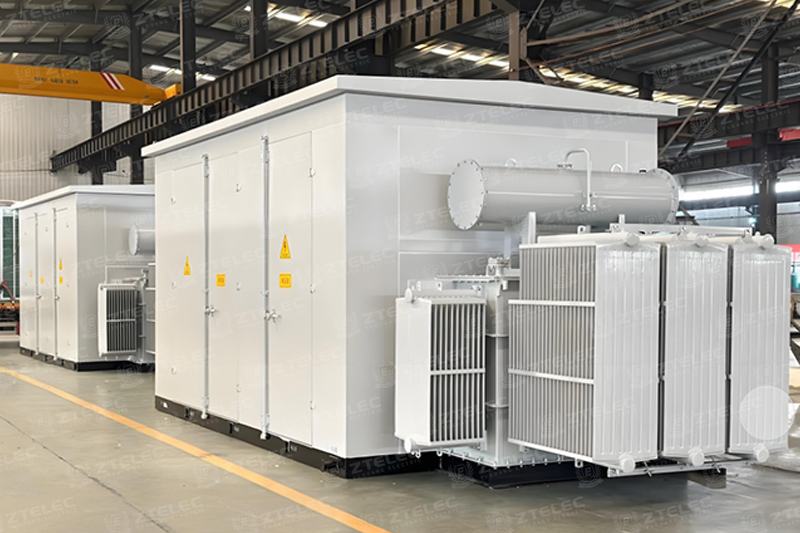
Cooling System: Radiators, cooling fins, fans, or pumps may be used depending on transformer capacity and the required cooling method.
Bushings: Bushings provide insulated electrical connections between the internal windings and external cables or conductors.
Tap Changer: An off-circuit or on-load tap changer can be used to adjust the transformer turns ratio and maintain the required output voltage under different operating conditions.
Copper has lower electrical resistivity than aluminum. For transformer windings, this can help reduce conductor losses when the winding is appropriately designed for the required current and temperature rise.
High conductivity is particularly valuable in transformers operating at relatively high current levels. Engineers can optimize conductor cross-section, winding arrangement, impedance, and thermal performance according to the required transformer rating.
Copper has high thermal conductivity, allowing heat to move efficiently through the winding conductor. When combined with oil circulation and an appropriately designed radiator system, this supports effective heat dissipation.
Good thermal management is essential because excessive temperature rise can accelerate insulation aging and affect the service life of a transformer.
Transformer windings can experience significant mechanical forces during short-circuit events. Copper provides strong mechanical characteristics and can be engineered into compact winding structures with appropriate clamping and support systems.
Proper winding design, insulation, bracing, and manufacturing quality remain essential for short-circuit withstand capability. Copper alone does not determine the complete mechanical performance of a transformer.
Because copper has higher electrical conductivity than aluminum, transformer designers can often achieve the required electrical performance with a smaller conductor cross-section. This can help optimize winding dimensions and overall transformer size, although the final dimensions depend on voltage, capacity, insulation requirements, cooling design, and manufacturer engineering.
Copper winding oil-filled transformers are suitable for applications with demanding electrical loads, including industrial equipment, utility distribution systems, renewable energy facilities, commercial infrastructure, and other applications where stable transformer performance is important.
Transformer overload capability should always be evaluated according to the manufacturer's thermal design, insulation system, ambient temperature, loading profile, and applicable standards rather than assuming that copper windings automatically provide unlimited overload capacity.
The operating principle is based on electromagnetic induction. When alternating current flows through the primary winding, it produces a changing magnetic flux in the transformer core. The changing magnetic field induces voltage in the secondary winding.
The transformer oil surrounds the core and windings and performs two primary functions: electrical insulation and heat transfer.
During operation, electrical and magnetic losses generate heat inside the transformer. The heated oil transfers this heat toward the tank walls and radiators. Depending on the transformer design, cooling may occur through natural oil circulation, natural air circulation, forced air cooling, or forced oil circulation.
One of the most important decisions when purchasing an oil-filled transformer is whether to use copper or aluminum windings. Both materials are widely used in transformer manufacturing, and the better choice depends on project priorities, transformer capacity, installation conditions, budget, and performance requirements.
| Feature | Copper Windings | Aluminum Windings |
|---|---|---|
| Electrical Conductivity | Higher | Lower than copper |
| Electrical Resistivity | Lower | Higher |
| Thermal Conductivity | Higher | Lower than copper |
| Mechanical Strength | Generally higher | Generally lower |
| Conductor Size | Can be more compact for equivalent electrical performance | Usually requires a larger conductor cross-section |
| Material Cost | Generally higher | Generally lower |
| Weight | Higher material density | Lower material density |
| Typical Application | High-performance and demanding applications | Cost-sensitive distribution applications |
The main technical advantage of copper is its higher electrical conductivity. For a given conductor geometry, copper can provide lower winding resistance than aluminum. This can contribute to lower load losses when the transformer is properly designed.
Copper also provides good mechanical strength and thermal conductivity, which are valuable characteristics for transformers exposed to high current, demanding load cycles, or strict space limitations.
Aluminum is lighter and generally less expensive than copper. For some distribution transformer applications, aluminum windings can provide an economical solution while still meeting the required electrical and thermal performance.
The choice between copper and aluminum should therefore be based on the complete transformer design rather than material price alone. Buyers should compare efficiency, total ownership cost, dimensions, weight, thermal performance, short-circuit requirements, and expected operating conditions.
Copper oil-filled transformers are widely used in utility distribution networks to reduce medium voltage to utilization voltage levels for residential, commercial, and industrial customers.
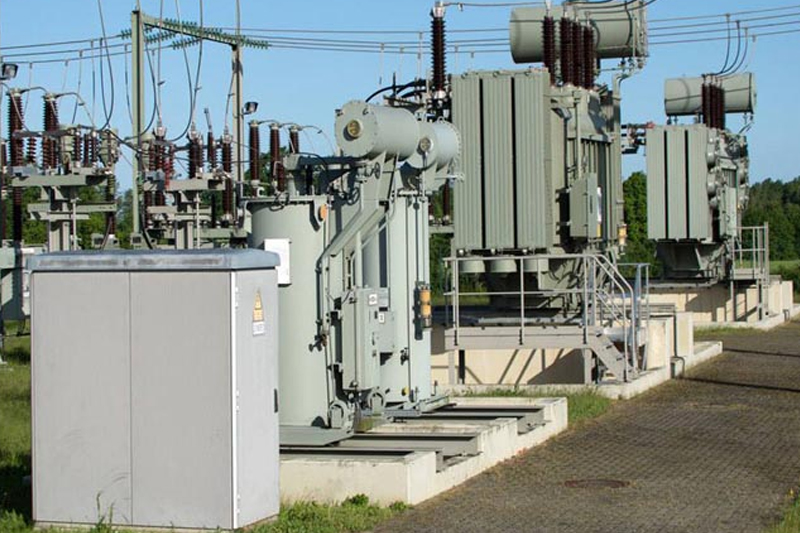
Depending on the grid configuration, these transformers may be installed in substations, distribution stations, industrial parks, and other electrical infrastructure facilities.
Industrial facilities often have large motors, production equipment, furnaces, compressors, pumps, and other electrical loads. Copper winding oil-filled transformers can be engineered to meet the high current and reliability requirements of these applications.
Common applications include manufacturing plants, mining operations, metallurgy facilities, chemical plants, oil and gas facilities, and large processing facilities.
Solar photovoltaic projects require transformers to connect inverter output to medium-voltage collection systems or grid connection equipment.
Oil-filled transformers with copper windings can be designed for renewable energy applications where high efficiency, thermal performance, outdoor installation, and long operating periods are important considerations.
Wind farms use transformers to increase voltage from turbine generators or collection systems before electricity is transmitted through the site's medium-voltage or high-voltage network.
Transformer selection for wind projects should consider variable loading, environmental conditions, harmonic content, altitude, cooling requirements, and the specific characteristics of the wind turbine electrical system.
Commercial facilities, hospitals, shopping centers, office buildings, and data centers require dependable electrical distribution. Oil-filled transformers may be used in outdoor substations or dedicated electrical areas where site conditions and fire-safety requirements permit their installation.
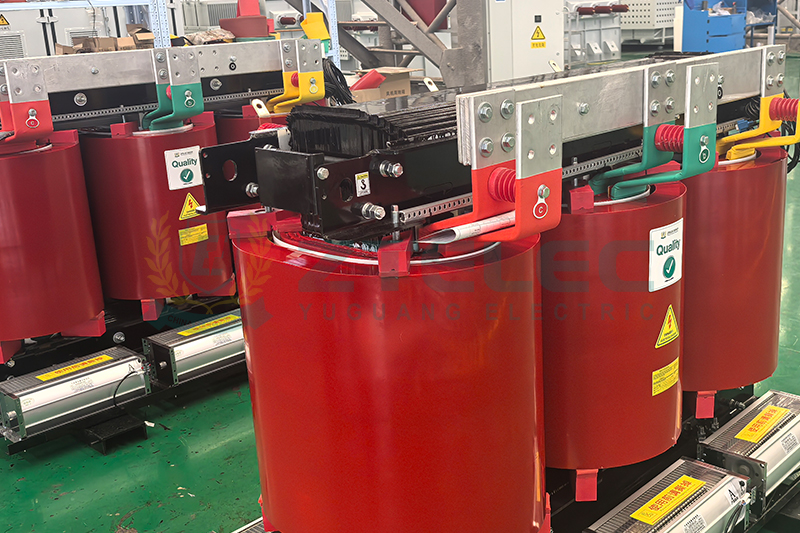
For indoor applications with strict fire-safety requirements, dry-type transformers may be considered as an alternative depending on local regulations and project design.
Railway systems, airports, ports, and other transportation infrastructure require reliable electrical power for traction systems, lighting, signaling, communications, HVAC systems, cargo equipment, and auxiliary facilities.
Transformer specifications should be customized according to the electrical characteristics and environmental conditions of each transportation project.
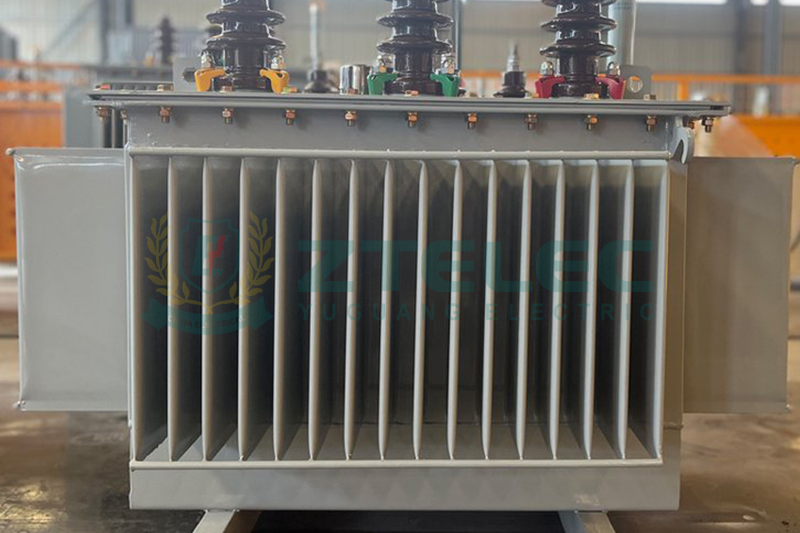
Cooling performance is an important part of transformer design. The appropriate cooling method depends on transformer capacity, installation conditions, expected load profile, ambient temperature, and required temperature rise.
ONAN stands for Oil Natural Air Natural. Oil circulation occurs naturally through thermal convection, while heat is transferred from the radiator or tank surface to the surrounding air through natural air circulation.
ONAN cooling is commonly used for many distribution and medium-capacity oil-filled transformers because of its relatively simple construction and low auxiliary power requirements.
ONAF stands for Oil Natural Air Forced. Oil circulation remains primarily natural, while fans force air across the radiators to increase heat dissipation.
This cooling configuration can provide greater thermal capacity without requiring the same degree of complexity as forced oil circulation systems.
OFAF stands for Oil Forced Air Forced. Pumps circulate the transformer oil while fans force air through the radiators or heat exchangers.
This approach is generally associated with larger transformers where higher cooling capacity and more controlled thermal management are required.
Although oil-filled transformers are designed for long-term operation, regular inspection and maintenance are essential for reliability and service life.
Oil condition should be monitored periodically. Depending on the transformer and maintenance program, tests may include dielectric breakdown voltage, moisture content, acidity, dissolved gas analysis, and other oil quality parameters.
Maintenance personnel should inspect bushings, radiators, valves, gaskets, conservators, cable connections, grounding connections, and the transformer tank for abnormal conditions or oil leakage.
Transformer winding and oil temperatures should be monitored to identify abnormal thermal conditions. Excessive temperature can accelerate insulation aging and should be investigated promptly.
Depending on the maintenance schedule and applicable standards, electrical tests may include insulation resistance, winding resistance, turns ratio testing, power factor or dissipation factor testing, and other diagnostic measurements.
Transformers equipped with on-load or off-circuit tap changers require inspection and maintenance according to the manufacturer's recommendations. Contact condition, operating mechanism, oil condition, and switching performance should be evaluated as applicable.
Determine the required transformer rating in kVA or MVA based on the present load, load growth, demand profile, and system redundancy requirements.
The rated voltage must match the electrical network. Common distribution voltage classes include 6kV, 10kV, 11kV, 20kV, 22kV, 33kV, and 35kV, although actual requirements vary by country and utility network.
Transformer frequency must correspond to the electrical system, typically 50Hz or 60Hz depending on the country and application.
Vector group and impedance are important for system compatibility, parallel operation, voltage regulation, fault-current characteristics, and protection coordination.
Specify whether ONAN, ONAF, OFAF, or another cooling arrangement is required according to transformer capacity and operating conditions.
Ambient temperature, altitude, humidity, pollution level, salt exposure, seismic conditions, and installation location should be considered when selecting insulation levels, enclosure design, cooling equipment, and accessories.
Depending on the application, a copper oil-filled transformer may require a Buchholz relay, pressure relief device, oil level indicator, winding temperature indicator, oil temperature indicator, surge arresters, monitoring sensors, tap changer, and other protection or monitoring equipment.
Transformer specifications should comply with the relevant national and international standards. Depending on the target market, applicable standards may include the IEC 60076 series, IEEE transformer standards, or corresponding national standards.
The expansion of solar and wind power is increasing demand for transformers that can operate reliably under changing load conditions. Renewable energy transformers may experience variable loading, frequent operating changes, harmonics from power electronic equipment, and challenging outdoor environments.
When selecting a transformer for renewable energy applications, buyers should evaluate more than the winding material. Core losses, load losses, impedance, thermal design, insulation system, cooling capacity, harmonic requirements, environmental protection, and monitoring functions should all be considered.
Copper windings can be an attractive choice when high conductivity, compact design, and demanding operating performance are important project requirements.
Oil-filled transformers require appropriate environmental and fire-safety measures because insulating oil can present a leakage and fire risk if the equipment is improperly designed, installed, or maintained.
Modern transformer installations can incorporate oil containment systems, leak detection, appropriate fire protection, sealed or conservator-type tank designs, and other safety measures according to project requirements.
In applications where environmental sustainability is a major consideration, natural ester transformer fluids and other alternative insulating fluids may be considered. These fluids can offer different fire-safety and environmental characteristics compared with conventional mineral oil.
Digital monitoring is becoming increasingly important in modern transformer systems. Sensors and intelligent monitoring devices can collect operating data such as transformer temperature, oil level, load current, voltage, and other condition indicators.
When connected to a supervisory or energy management system, this data can support remote monitoring and condition-based maintenance.
Advanced transformer monitoring can help operators identify abnormal operating conditions earlier, improve maintenance planning, and reduce the risk of unexpected equipment downtime.
Choosing an experienced copper oil-filled transformer manufacturer is important for projects where transformer efficiency, reliability, and long-term operating costs are critical.
Buyers should evaluate the manufacturer's engineering capabilities, production facilities, testing equipment, quality control procedures, transformer design experience, and ability to customize winding materials and electrical parameters.
A qualified manufacturer should be able to provide technical documentation covering transformer capacity, voltage ratio, frequency, vector group, impedance, no-load losses, load losses, temperature rise, insulation level, cooling method, dimensions, weight, accessories, and applicable standards.
For international projects, buyers should also confirm export experience and the manufacturer's ability to provide the documentation, testing, certifications, and packaging required for the destination market.
Copper oil-filled transformers combine the high conductivity and mechanical strength of copper windings with the insulation and cooling capabilities of transformer oil. They are suitable for a wide range of applications, including utility distribution, industrial power systems, renewable energy projects, commercial infrastructure, and transportation facilities.
The primary advantages of copper windings include high electrical conductivity, excellent thermal performance, and strong mechanical characteristics. However, copper is not automatically the best choice for every transformer. Aluminum windings can provide a more cost-effective solution for certain distribution applications, while copper may be preferred when efficiency, compact design, mechanical strength, and demanding operating conditions are higher priorities.
When purchasing a copper winding oil-filled transformer, buyers should evaluate transformer capacity, voltage, frequency, vector group, impedance, cooling method, insulation requirements, environmental conditions, applicable standards, protection accessories, maintenance requirements, and total cost of ownership.
With the continued growth of renewable energy, industrial electrification, smart grids, and high-capacity power infrastructure, properly engineered copper oil-filled transformers will continue to play an important role in reliable and efficient electrical power distribution.

ZTELEC Yuguang Electric Technology, founded in 2014, builds on state-owned industrial expertise to deliver reliable power solutions worldwide.
Copyright © 2026.ztygelectric All rights reserved.