

Choosing the right transformer is an important decision for any electrical distribution project. The transformer affects system reliability, installation requirements, operating costs, maintenance, fire protection, and long-term energy efficiency.
Two of the most widely used options are dry type transformers and oil filled transformers. Although both perform the same fundamental function—transferring electrical energy between voltage levels—their insulation systems, cooling methods, installation requirements, and typical applications are different.
This dry type vs oil filled transformer guide compares the two technologies across the factors that matter most to engineers, EPC contractors, facility managers, utilities, and industrial power users. It also explains how to choose the most suitable transformer based on voltage, capacity, installation environment, fire safety, maintenance requirements, and total cost of ownership.
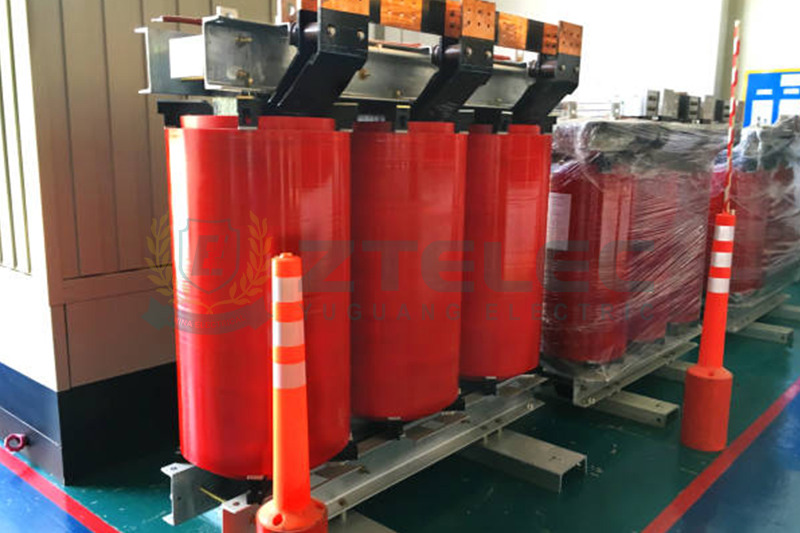
A dry type transformer is a transformer that does not use liquid insulating oil as its primary insulation and cooling medium. Heat is dissipated through air circulation, either naturally or with forced-air cooling depending on the transformer design and rating.
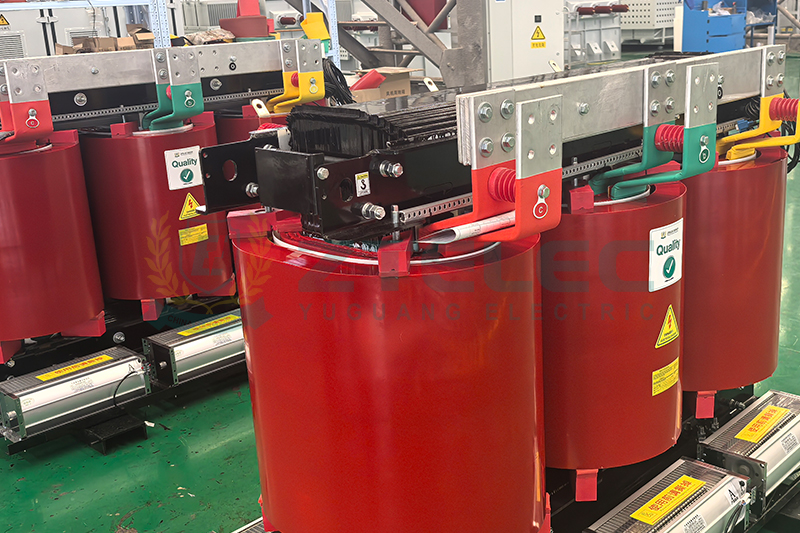
Many modern dry type transformers use cast resin or epoxy insulation. In a cast resin transformer, the windings are encapsulated in solid insulation, helping protect the winding system from moisture, dust, and other environmental contaminants.
Dry type transformers are especially attractive for applications where fire safety, indoor installation, environmental protection, and reduced routine maintenance are important considerations.
Cooling: Dry type transformers typically use natural air cooling or forced-air cooling.
Insulation: Common designs include cast resin and other solid insulation systems.
Fire safety: Because there is no mineral insulating oil, dry type transformers generally present a lower fire and spill risk than conventional mineral-oil-filled transformers. The exact fire performance depends on the transformer design and insulation materials.
Maintenance: Routine maintenance generally focuses on cleaning, ventilation, connections, insulation condition, and temperature monitoring rather than oil testing.
Installation: Dry type transformers can be designed for indoor or outdoor applications, provided the enclosure and environmental protection are appropriate for the installation conditions.
Dry type transformers are widely used in commercial buildings, hospitals, schools, data centers, industrial plants, transportation infrastructure, renewable energy facilities, and other locations where fire safety and environmental considerations are important.
They are also commonly specified for indoor substations and electrical rooms because eliminating insulating oil can simplify certain fire protection and spill containment requirements.
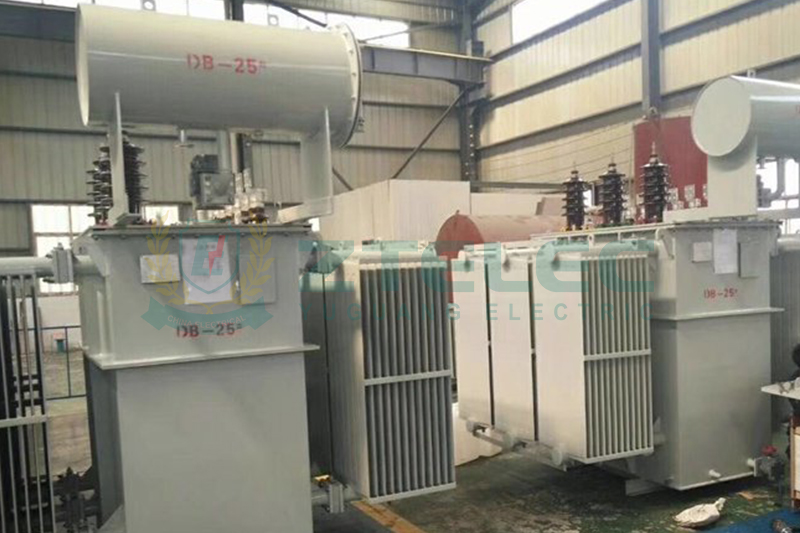
An oil filled transformer, also known as an oil immersed transformer, uses insulating liquid for both electrical insulation and heat transfer. Mineral oil is widely used, while some projects specify alternative insulating fluids depending on environmental, fire-safety, or performance requirements.
The insulating liquid absorbs heat generated by the transformer windings and core and transfers that heat toward the tank and cooling system. This makes liquid-filled designs particularly suitable for high-capacity and high-voltage power distribution applications.
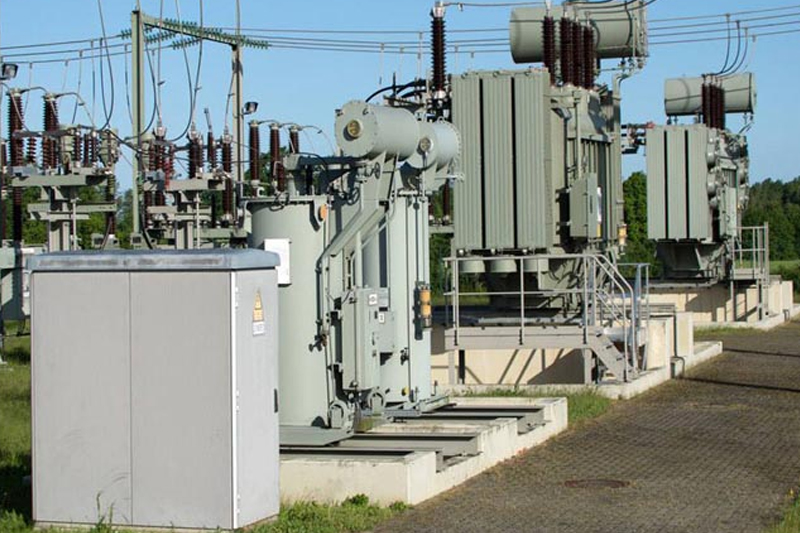
Oil filled transformers have been used extensively in utility networks, industrial power systems, renewable energy projects, substations, and other large-scale electrical infrastructure.
Cooling: The insulating liquid provides efficient heat transfer and can support natural or forced cooling systems.
Insulation: The insulating liquid works together with solid insulation materials to provide electrical insulation between windings and other energized components.
Power capacity: Oil filled designs are widely available for medium- and high-capacity applications.
Installation: Many oil filled transformers are installed outdoors, although indoor installation is possible when appropriate fire protection, ventilation, containment, and local code requirements are addressed.
Maintenance: Maintenance can include inspection of oil condition, bushings, seals, cooling equipment, connections, and protection systems.
The best way to compare dry type and oil filled transformers is to evaluate them according to the operating conditions of the project rather than assuming that one technology is always better.
| Comparison Factor | Dry Type Transformer | Oil Filled Transformer |
|---|---|---|
| Cooling Medium | Air, with optional forced-air cooling | Insulating liquid, with natural or forced cooling |
| Insulation System | Solid insulation, commonly cast resin or other dry insulation systems | Liquid and solid insulation system |
| Fire and Spill Risk | Generally lower fire and spill risk because there is no conventional mineral oil | Requires consideration of liquid flammability, leakage, containment, and fire protection depending on the fluid used |
| Typical Installation | Indoor and outdoor applications when properly designed | Commonly outdoor, with indoor applications possible when properly engineered |
| Oil Maintenance | No insulating oil testing required | Liquid condition may require periodic testing and monitoring |
| Heat Dissipation | Good, but dependent on air circulation and design | Excellent heat transfer characteristics for high-load applications |
| Environmental Considerations | No conventional oil spill risk | Liquid containment and leak prevention may be required |
| Typical Applications | Buildings, data centers, factories, indoor substations, renewable energy | Utilities, substations, industrial plants, grid distribution, high-power systems |
Cooling is one of the most important differences between dry type and oil filled transformers.
A dry type transformer transfers heat through air. Its thermal performance depends on winding design, enclosure design, ambient temperature, ventilation, and whether forced-air cooling is used.
An oil filled transformer uses insulating liquid to transfer heat away from the core and windings. Liquid generally provides more effective heat transfer than air, which is one reason oil immersed transformer technology is widely used for larger power ratings.
For high-load utility and industrial applications, an oil filled transformer can provide a practical solution for managing transformer losses and operating temperatures.
Fire safety can strongly influence transformer selection, particularly inside commercial buildings, hospitals, data centers, underground facilities, and densely populated areas.
Dry type transformers do not contain conventional mineral insulating oil, so they eliminate the oil leakage and oil-pool fire risks associated with conventional oil filled transformers. However, dry type transformers are not automatically fireproof; the actual fire performance depends on the insulation system, enclosure, installation design, and applicable standards.
Oil filled transformers require additional consideration of the insulating liquid's fire characteristics. Depending on the project and local regulations, measures such as oil containment, fire barriers, separation distances, fire detection, or other protective systems may be required.
Environmental requirements are becoming increasingly important when selecting electrical equipment.
Dry type transformers eliminate the risk of conventional insulating oil leakage because they do not use liquid oil. This can be particularly advantageous in environmentally sensitive locations or indoor installations where liquid containment is difficult.
Oil filled transformers require appropriate measures to prevent and manage liquid leakage. For environmentally sensitive projects, alternative insulating fluids with improved fire or environmental characteristics may also be considered.
Dry type transformers generally have a simpler maintenance routine because they do not require insulating oil management. Regular inspection should include cleaning accumulated dust, checking ventilation, inspecting electrical connections, monitoring operating temperature, and examining insulation for signs of deterioration.
Oil filled transformers require additional attention to the condition of the insulating liquid. Depending on transformer design, operating conditions, age, and maintenance strategy, oil testing may include moisture, dielectric strength, acidity, dissolved gas analysis, and other diagnostic parameters.
Therefore, the maintenance strategy should be based on the transformer's design, criticality, operating environment, and manufacturer's recommendations rather than applying a fixed maintenance interval to every transformer.
Comparing transformer prices only by purchase cost can lead to an inaccurate decision.
The initial price of a dry type transformer can be higher in some applications because of the materials and manufacturing processes used in its insulation system. However, dry type transformers can reduce certain ongoing costs associated with oil testing, liquid handling, and spill containment.
Oil filled transformers can offer competitive initial costs, particularly for higher-capacity applications. Their total cost of ownership should also account for oil testing, maintenance, cooling equipment, containment requirements, transportation, installation, and environmental compliance.
The most economical choice should therefore be based on total cost of ownership rather than purchase price alone.
Both dry type and oil filled transformers can achieve high efficiency when correctly designed and manufactured. Transformer efficiency depends on factors such as core material, winding resistance, load profile, cooling system, operating temperature, and design losses.
It is therefore inaccurate to assume that every oil filled transformer is more efficient than every dry type transformer. The correct comparison should use the actual guaranteed no-load losses, load losses, efficiency, temperature-rise limits, and applicable standards for the specific transformer models.
For projects with continuous operation, even relatively small differences in transformer losses can have a significant effect on lifetime energy consumption.
Installation location is often a decisive factor.
Dry type transformers are commonly selected for indoor substations, commercial buildings, hospitals, data centers, factories, transportation facilities, and other locations where eliminating liquid insulation is advantageous.
Oil filled transformers are widely used in outdoor substations, utility distribution networks, renewable energy facilities, industrial plants, and high-capacity electrical systems. Their installation design must account for liquid containment, fire protection, ventilation, environmental requirements, and applicable electrical codes.
Lower fire and spill risk: The absence of conventional mineral oil makes dry type transformers attractive for many indoor and fire-sensitive installations.
Lower routine maintenance burden: There is no insulating oil to sample, filter, or replace.
Indoor installation flexibility: Properly designed dry type transformers can be installed close to electrical loads and inside dedicated electrical rooms.
Environmental benefits: There is no conventional oil leakage risk from the transformer insulation system.
Suitable for modern facilities: Dry type transformers are frequently considered for data centers, commercial buildings, hospitals, factories, renewable energy systems, and transportation infrastructure.
Cooling limitations: Air has lower heat-transfer capability than insulating liquid, so transformer design and ventilation become increasingly important as capacity and load increase.
Potentially higher initial cost: Depending on the design and specifications, a dry type transformer may have a higher purchase price than a comparable oil filled unit.
Environmental sensitivity: Dust, moisture, inadequate ventilation, and high ambient temperatures can affect performance if the transformer is not correctly installed and maintained.
Excellent heat transfer: Insulating liquid provides effective heat dissipation, making oil immersed technology suitable for many high-capacity applications.
Wide power range: Oil filled transformers are available in a broad range of ratings for distribution, industrial, renewable energy, and utility applications.
Proven technology: Oil filled transformers have a long operating history in utility and industrial power systems.
High-capacity suitability: They are particularly common in substations and power networks where large amounts of electrical energy must be transformed continuously.
Liquid management: The insulating fluid requires monitoring and appropriate maintenance.
Leakage considerations: Tank, gasket, bushing, and accessory conditions must be monitored to prevent liquid leakage.
Fire protection requirements: Conventional mineral oil can be flammable, so installation design must comply with applicable fire safety requirements.
Environmental management: Spill prevention, containment, handling, and disposal requirements need to be considered throughout the transformer's lifecycle.
The right transformer should be selected based on the complete electrical and environmental requirements of the project.
Start with the transformer's required kVA or MVA rating, primary voltage, secondary voltage, frequency, impedance, and load profile.
Dry type and oil filled transformers are both available across many voltage and capacity ranges, so the decision should not be based on capacity alone. Instead, evaluate the specific manufacturer's product range and the requirements of the electrical system.
For indoor electrical rooms, commercial buildings, hospitals, data centers, and similar facilities, dry type transformers can offer important advantages related to fire safety and liquid containment.
For outdoor substations, utility distribution, and large industrial installations, oil filled transformers are often a practical choice because of their strong thermal performance and wide availability.
If the transformer will be installed near occupied spaces or inside a building, fire protection requirements should be reviewed at the earliest stage of the project.
A dry type transformer may simplify certain aspects of fire-risk management, but the complete installation still needs to comply with local electrical and building codes.
Facilities with limited maintenance resources may benefit from the simpler routine maintenance requirements of dry type transformers.
For oil filled transformers, the maintenance program should include appropriate inspection and diagnostic testing of the insulating liquid and transformer accessories.
Instead of comparing only the purchase price, evaluate the expected lifecycle cost. This should include transformer losses, electricity consumption, installation, maintenance, inspections, spare parts, cooling requirements, fire protection, oil management, and potential downtime.
The transformer should be manufactured and tested according to the standards specified for the project and local market. Depending on the application and region, relevant transformer standards may include IEC, IEEE, GB/T, or other national and industry standards.
Buyers should also request technical documentation covering routine tests, type tests where applicable, loss data, impedance, temperature rise, insulation level, enclosure rating, and other required parameters.
There is no universal answer to the question of which transformer is better. The better choice depends on the application.
| Project Requirement | Recommended Starting Point | Main Reason |
|---|---|---|
| Indoor commercial building | Dry Type Transformer | Lower liquid-related risk and suitable indoor installation |
| Hospital or public facility | Dry Type Transformer | Fire safety and maintenance considerations |
| Data center | Dry Type Transformer | Indoor installation, reliability, and simplified liquid management |
| Large outdoor substation | Oil Filled Transformer | Strong thermal performance and broad capacity range |
| Utility distribution network | Oil Filled Transformer | Established technology and suitability for outdoor grid applications |
| Industrial facility | Dry Type or Oil Filled | Depends on capacity, environment, fire requirements, and lifecycle cost |
| Solar or wind project | Dry Type or Oil Filled | Depends on installation environment, voltage, capacity, and project specifications |
This is not necessarily true. Modern dry type transformers can achieve high efficiency. The correct evaluation should compare the actual guaranteed losses and efficiency data of specific transformer models.
Oil filled transformers can have competitive initial pricing, especially in higher-capacity applications, but the overall project cost also depends on installation, containment, maintenance, oil testing, fire protection, and environmental requirements.
Dry type transformers are available in a wide range of capacities and voltage classes. However, for very high-capacity applications, oil filled technology may provide advantages in thermal management, physical size, and overall system economics.
Outdoor installation is common, but oil filled transformers can be used indoors when the transformer room, fire protection, ventilation, liquid containment, separation, and applicable codes are properly addressed.
A commercial building needs a transformer close to its main electrical distribution system. Because the transformer is installed indoors and fire safety is a major consideration, a cast resin dry type transformer can be a suitable solution. The facility can benefit from simplified routine maintenance and the elimination of conventional insulating oil.
A utility company requires a high-capacity transformer for an outdoor distribution substation. An oil filled transformer may be selected because of its strong heat transfer capability, broad product availability, and suitability for continuous high-load operation.
A solar or wind project needs a transformer to connect generation equipment to a medium-voltage or high-voltage collection system. The final choice between dry type and oil filled technology depends on transformer capacity, voltage level, environmental conditions, installation configuration, fire requirements, and the project's lifecycle cost.
Inspect the transformer regularly for dust accumulation, moisture, abnormal noise, overheating, insulation damage, loose connections, and ventilation problems.
Keep air passages and cooling surfaces clean. Thermal imaging can also be used to identify abnormal temperature increases at connections or other components before they develop into serious faults.
Regularly inspect the transformer tank, bushings, gaskets, valves, cooling equipment, and accessories. The insulating liquid should be tested according to the transformer's operating conditions and maintenance program.
For critical transformers, condition-based maintenance and diagnostic technologies such as dissolved gas analysis can help identify developing internal faults and insulation problems.
Transformer technology continues to evolve toward higher efficiency, better monitoring, improved fire safety, and lower environmental impact.
Modern transformers can integrate temperature sensors, load monitoring, online diagnostics, and digital communication systems. These technologies support condition-based maintenance and help operators identify abnormal operating conditions earlier.
For liquid-filled transformers, alternative insulating fluids with improved fire performance and environmental characteristics are becoming increasingly important in certain applications.
Amorphous metal core transformers can significantly reduce no-load losses compared with conventional core designs. They are particularly attractive for applications where transformers remain energized continuously and energy efficiency is a major priority.
Manufacturers are continuing to optimize core materials, winding structures, insulation systems, cooling methods, and manufacturing processes to reduce losses and improve transformer reliability throughout the operating lifecycle.
The primary difference is the insulation and cooling system. Dry type transformers use air and solid insulation, while oil filled transformers use insulating liquid together with solid insulation to provide cooling and electrical insulation.
Dry type transformers are often preferred for indoor applications because they do not contain conventional insulating oil and generally present lower liquid-related fire and spill risks. However, the final selection must comply with the applicable building, electrical, and fire safety requirements.
Depending on the rating and specifications, dry type transformers can have a higher initial purchase price. However, the total lifecycle cost may be competitive because of reduced liquid-related maintenance and containment requirements.
Oil filled transformers can provide excellent thermal performance, especially at high ratings, but transformer efficiency depends on the specific design. Core losses, load losses, winding design, cooling system, and operating conditions should all be considered.
Yes. Dry type transformers can be designed for outdoor installation with suitable enclosures and environmental protection. The transformer must be selected according to ambient temperature, humidity, dust, precipitation, altitude, enclosure requirements, and other site conditions.
There is no single maintenance interval that applies to every oil filled transformer. The recommended schedule depends on transformer design, age, load, operating environment, criticality, manufacturer recommendations, and condition-monitoring results. Oil testing should be performed according to an appropriate maintenance program rather than relying on a universal one-to-three-year interval.
Dry type transformers are commonly considered for data centers because they are suitable for indoor electrical rooms and eliminate conventional mineral oil. However, the final choice should consider capacity, redundancy, efficiency, fire protection, short-circuit requirements, installation conditions, and the data center's overall power architecture.
The choice between a dry type transformer and an oil filled transformer should be based on the complete requirements of the electrical project rather than on price or transformer type alone.
Dry type transformers are particularly attractive for indoor facilities, commercial buildings, hospitals, data centers, transportation infrastructure, and projects where fire safety, simplified maintenance, and elimination of conventional insulating oil are important.
Oil filled transformers remain an excellent choice for utility substations, outdoor distribution networks, large industrial facilities, renewable energy projects, and high-capacity applications where effective heat transfer and long-established liquid-filled transformer technology are important.
Before making a final decision, compare the required kVA or MVA rating, voltage level, load profile, efficiency, losses, installation environment, fire protection requirements, maintenance strategy, applicable standards, and total cost of ownership.
For transformer buyers and EPC contractors, the most effective approach is to provide the manufacturer with complete technical requirements and request a project-specific design and quotation. A properly selected transformer can improve electrical efficiency, reliability, safety, and long-term operating performance.

ZTELEC Yuguang Electric Technology, founded in 2014, builds on state-owned industrial expertise to deliver reliable power solutions worldwide.
Copyright © 2026.ztygelectric All rights reserved.