

As global electric vehicle adoption continues to accelerate, charging infrastructure is placing unprecedented demands on power distribution systems. Traditional commercial transformers are often unable to handle the dynamic loading patterns, harmonic distortion, and future expansion requirements associated with EV charging stations.
A 500 kVA substation has become one of the most widely adopted solutions for medium-sized EV charging facilities, typically supporting 20 to 50 charging points, commercial parking lots, fleet depots, and industrial charging hubs. Combining moderate capacity, compact footprint, and modular scalability, it provides an ideal balance between investment cost and operational flexibility.
This guide covers capacity planning, technical specifications, harmonic mitigation strategies, installation considerations, certification requirements, and current FOB pricing to help EPC contractors, charging operators, and international buyers make informed procurement decisions.
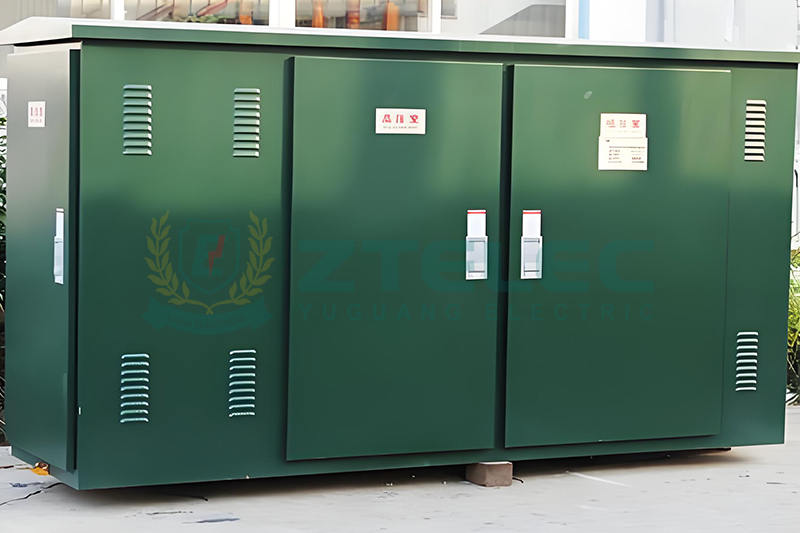
Most DC fast chargers currently deployed worldwide operate at power ratings of 60 kW, 120 kW, or 180 kW. Assuming a power factor of 0.9 and transformer utilization between 90% and 100%, a 500 kVA transformer can reliably deliver approximately 405–450 kW of active power.
Under typical charging diversity factors of 60% to 70%, a 500 kVA substation can support:
4–5 units of 120 kW DC fast chargers operating simultaneously.
8–10 units of 60 kW chargers.
A mixed configuration consisting of two 180 kW ultra-fast chargers and four 60 kW chargers when combined with intelligent load management systems.
In many countries, a 500 kVA transformer can connect directly to 10 kV, 11 kV, or 15 kV medium-voltage distribution networks without requiring dedicated high-voltage transmission infrastructure. This significantly reduces utility approval timelines, grid connection costs, and overall project complexity compared with installations exceeding 1 MVA.
500 kVA is one of the most commonly manufactured ratings for compact substations and prefabricated substations. Because of its standardized design and mature supply chain, lead times are typically between 6 and 10 weeks for standard configurations and 8 to 14 weeks for customized solutions.
The following specifications are commonly recommended for EV charging station substations designed according to IEC standards.
| Parameter | Recommended Specification |
|---|---|
| Rated Capacity | 500 kVA |
| Primary Voltage | 10 kV, 11 kV, 15 kV, or 33 kV |
| Secondary Voltage | 400 V, 415 V, 380 V, or 480 V |
| Vector Group | Dyn11 |
| No-Load Loss | ≤ 870 W |
| Load Loss | ≤ 7,400 W at 75°C |
| Impedance Voltage | 4%–6% |
| K-Factor Rating | K-13 or K-20 |
| Cooling Method | ONAN or AN |
| Protection Degree | IP54 recommended |
| Noise Level | ≤ 55 dB(A) |
One of the most important design challenges for EV charging infrastructure is harmonic distortion. Fast chargers utilize AC/DC rectifiers that behave as nonlinear loads, generating harmonic currents dominated by the 5th and 7th harmonics.
Total Harmonic Distortion of Current (THDi) can frequently reach 20% to 40%, creating additional eddy current losses inside transformer windings. Excessive harmonics increase operating temperatures, reduce insulation life, and lower overall transformer efficiency.
To address these challenges, engineers typically specify Dyn11 transformers. The delta-connected high-voltage winding traps triplen harmonics internally and prevents them from propagating into the utility network.
Additional harmonic mitigation measures often include passive harmonic filters designed for the 5th and 7th harmonics or Active Power Filters (APF) capable of maintaining THDi below 5% and supporting compliance with IEEE 519 and IEC 61000 requirements.
EV charging loads are highly dynamic. During peak charging periods, transformer loading can rise from 10% to more than 90% within minutes. To ensure reliability and future scalability, engineers generally reserve 15% to 20% spare capacity beyond expected operating demand.
Dynamic Load Management (DLM) systems continuously monitor transformer loading and automatically adjust charger output power when demand approaches rated capacity.
Battery Energy Storage Systems (BESS) are increasingly integrated with charging stations. A 100 kWh to 200 kWh lithium iron phosphate battery can reduce peak demand charges, improve power quality, and provide backup power during grid interruptions.
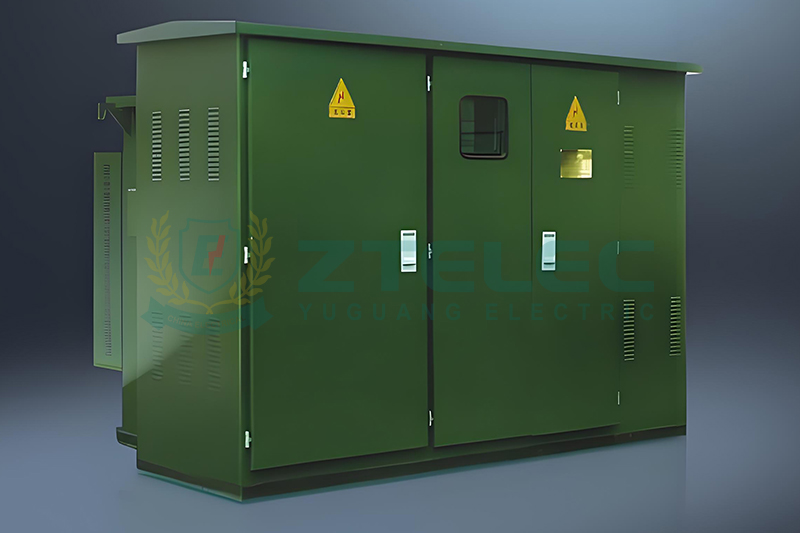
For most EV charging projects, compact substations offer significant advantages over conventional substations.
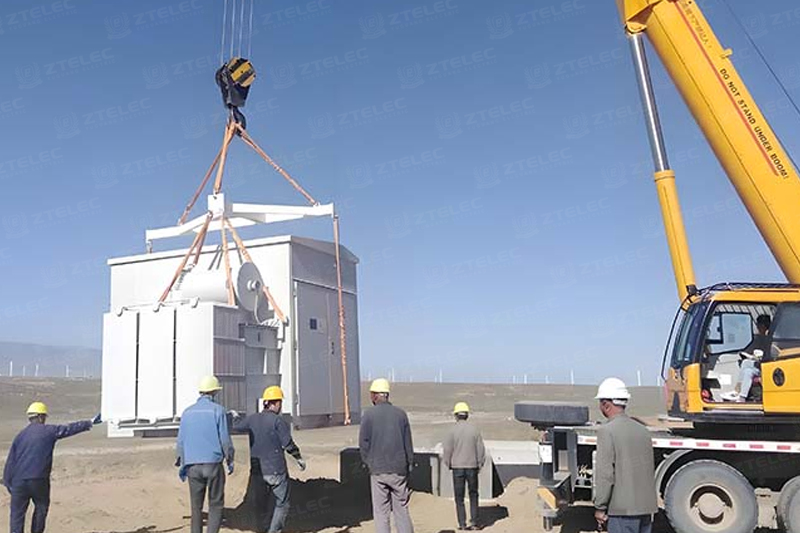
Installation can often be completed within one to three days once the concrete foundation is ready. Traditional substations may require several weeks or months of civil construction and equipment assembly.
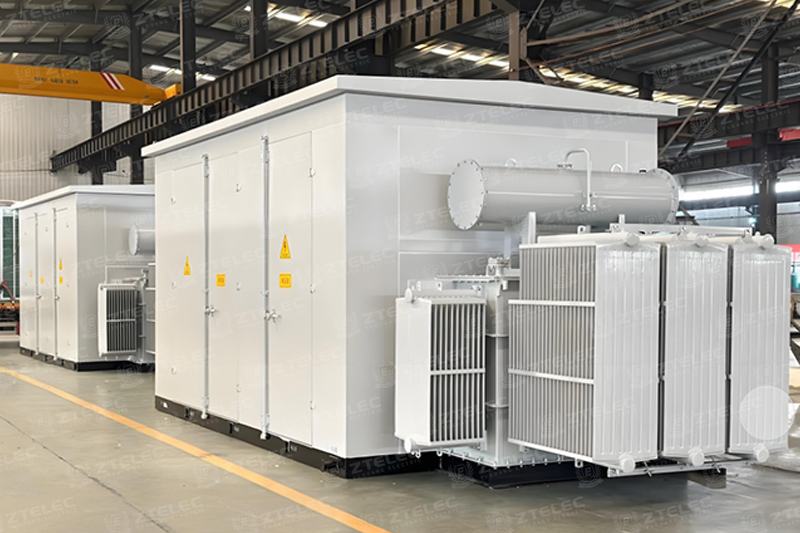
Typical 500 kVA compact substations occupy only 6 to 15 square meters, making them particularly suitable for urban parking facilities, fleet depots, highway service areas, and commercial charging stations where space is limited.
The modular design also simplifies future expansion through parallel transformer installation without major reconstruction work.
A reinforced C30 concrete foundation is recommended, raised approximately 100 to 150 mm above ground level to prevent water ingress. Cable trenches, grounding conductors, and oil containment facilities should be incorporated during foundation construction.
Cross-linked polyethylene (XLPE) insulated power cables complying with IEC 60502-2 are typically used. For an 11 kV 500 kVA transformer with a primary current of approximately 26 A, 35 mm² copper conductors are commonly specified.
A properly designed grounding system is essential for personnel safety and equipment protection. Transformer grounding resistance should generally remain below 4 Ω, while charging equipment should operate within a TN-S grounding arrangement with separate neutral and protective earth conductors.
Modern charging infrastructure increasingly requires intelligent monitoring functions, including winding temperature sensors, remote breaker control, power quality monitoring, and communication interfaces supporting Modbus RTU, IEC 61850, and OCPP integration.
These capabilities enable operators to achieve full visibility across the utility connection, transformer, switchgear, energy storage system, and charging network.
Based on current export quotations from major Chinese manufacturers, typical FOB pricing ranges are as follows:
| Configuration | FOB Price Range (USD) |
|---|---|
| 500 kVA Oil-Immersed Transformer | 9,500 – 14,000 |
| Transformer + RMU Switchgear | 18,000 – 28,000 |
| Complete Compact Substation | 28,000 – 45,000 |
| Substation + 100 kWh BESS | 65,000 – 95,000 |
Actual pricing depends on voltage class, enclosure protection level, switchgear configuration, harmonic filtering equipment, monitoring systems, certification requirements, and order quantity. Bulk purchases of three or more units typically qualify for additional discounts.
Export projects should clearly specify target-market compliance requirements during the RFQ stage.
European Union projects generally require IEC 60076 transformer compliance, IEC 62271-202 compact substation compliance, EN 50588-1 efficiency standards, and CE marking.
United Kingdom projects commonly require BS EN 60076 compliance and utility interconnection requirements under G99 and G100 regulations.
North American installations may require compliance with IEEE C57 transformer standards, ANSI switchgear standards, and applicable UL or CSA certifications.
Middle East and GCC countries often require SASO or ESMA approvals in addition to IEC compliance.
Southeast Asian markets generally accept IEC-certified equipment, although some countries maintain additional national certification requirements.
A typical 500 kVA substation can support approximately four to five 120 kW DC fast chargers operating simultaneously, depending on load diversity and power management strategies.
Dyn11 transformers effectively suppress triplen harmonics and improve compatibility with nonlinear charging loads, helping reduce overheating and improve power quality.
Oil-immersed transformers are generally preferred for outdoor compact substations because of their lower cost and superior overload capability, while dry-type transformers are often selected for indoor applications requiring enhanced fire safety.
While not mandatory, integrating battery energy storage can significantly reduce peak demand charges, improve grid stability, and enable future ultra-fast charging expansion.
A 500 kVA EV charging substation represents one of the most cost-effective and scalable solutions for modern charging infrastructure. With proper capacity planning, harmonic mitigation, smart monitoring integration, and compliance with international standards, it provides a reliable foundation for long-term charging station operation.
When preparing RFQs for international suppliers, buyers should clearly specify vector group requirements (Dyn11), K-factor rating, harmonic filtering solutions, low-voltage feeder quantities, communication protocols, and target-market certifications. Detailed specifications not only improve quotation accuracy but also reduce project risks and future modification costs.

ZTELEC Yuguang Electric Technology, founded in 2014, builds on state-owned industrial expertise to deliver reliable power solutions worldwide.
Copyright © 2026.ztygelectric All rights reserved.