

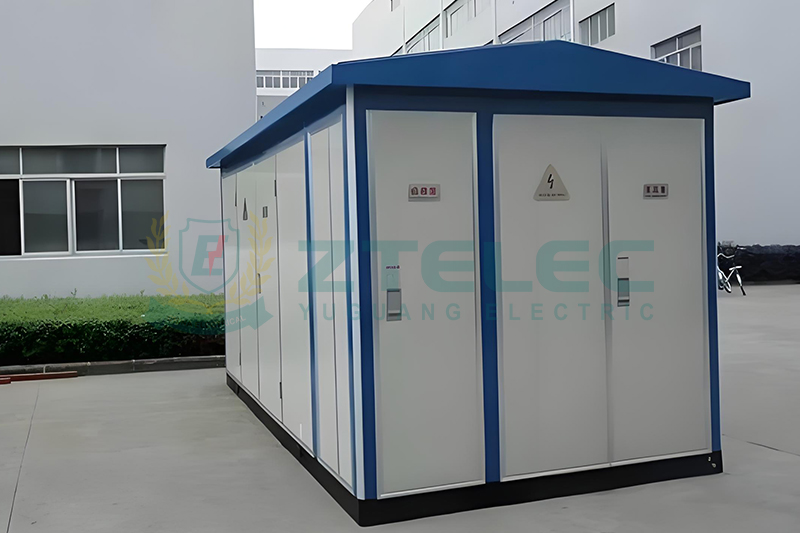
Commercial complexes, office buildings, shopping malls, hotels, schools, hospitals, and light manufacturing facilities all require reliable medium-voltage power distribution systems. Among today's most widely adopted solutions, the 500 kVA compact substation—also known as a package substation, prefabricated substation, or box-type substation—offers an ideal balance of footprint, installation speed, operational safety, and maintenance convenience.
However, selecting transformer capacity should never rely solely on experience or rough estimation. An oversized transformer increases investment and operating losses, while an undersized unit can cause overloads, reduced equipment life, and future expansion limitations. This guide explains how to determine whether a 500 kVA compact substation is the optimal choice by evaluating electrical load, capacity reserve, operational efficiency, reliability, and long-term project growth.
Proper transformer sizing always begins with a detailed assessment of the project's electrical demand. Every electrical load should be categorized and evaluated according to its operating characteristics rather than simply adding installed equipment ratings.
Typical commercial and light industrial loads include elevators, water pumps, HVAC systems, ventilation equipment, indoor and outdoor lighting, office equipment, retail outlets, kitchen appliances, refrigeration systems, security equipment, fire protection systems, UPS units, and communication infrastructure.
The installed connected load rarely represents actual operating demand because not every electrical device operates simultaneously at full capacity. Engineers therefore apply both the demand factor and the diversity factor when calculating the design load.
A simplified sizing formula is:
Required Transformer Capacity (kVA) = Total Installed Load (kW) × Demand Factor ÷ Power Factor × Diversity Adjustment
For most commercial buildings, demand factors typically range from 0.60 to 0.80, while light industrial facilities generally fall between 0.70 and 0.85 depending on production processes and operating schedules.
If the calculated demand is approximately 350–450 kVA, a 500 kVA compact substation generally provides an excellent balance between current operating requirements and future capacity.
One of the most common design mistakes is selecting a transformer whose rating almost exactly matches the calculated load. Although this minimizes initial investment, it significantly reduces operational flexibility.
Transformers operating continuously near full load experience higher winding temperatures, accelerated insulation aging, reduced service life, and limited ability to accommodate temporary peak loads.
Industry best practices recommend maintaining a continuous transformer loading between 70% and 85%. Within this range, transformers typically achieve excellent operating efficiency while retaining sufficient reserve capacity for seasonal demand fluctuations and future equipment additions.
For example, a facility with an expected operating demand of approximately 400 kVA will load a 500 kVA transformer at around 80%, which represents an ideal long-term operating condition.
Engineers should also consider several additional factors before finalizing transformer capacity, including projected business expansion over the next three to five years, seasonal HVAC peaks, additional production equipment, electric vehicle charging infrastructure, and harmonic-producing loads such as variable frequency drives, LED lighting, UPS systems, and data center equipment.
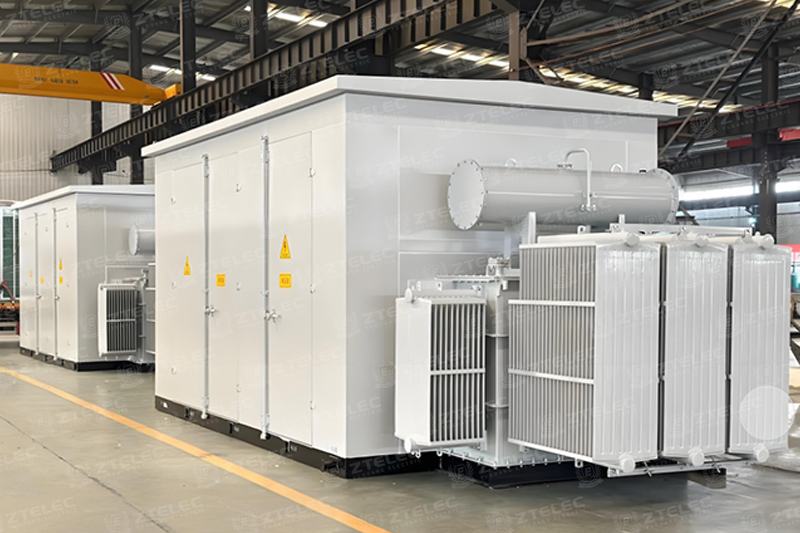
A 500 kVA package substation is widely used in medium-sized commercial developments and light industrial facilities where moderate power demand combines with limited installation space.
Typical applications include shopping centers with approximately 10,000 to 25,000 square meters of floor area, hotels containing 100 to 200 guest rooms, office buildings around 15,000 square meters, educational facilities, healthcare clinics, logistics warehouses, food processing plants, textile factories, electronics manufacturing workshops, commercial parks, and edge data centers.
These applications benefit from compact design, factory-assembled equipment, reduced civil engineering work, short installation periods, and simplified maintenance.
Heavy industrial facilities such as steel mills, mining operations, cement plants, large machining workshops, and electrochemical factories typically require significantly larger transformer capacities. In these cases, engineers usually select 800 kVA, 1000 kVA, 1250 kVA, or multiple transformers operating in parallel.
Capacity selection is only one aspect of substation design. System reliability is equally important, particularly for facilities where power interruptions can cause significant financial losses.
A single 500 kVA compact substation is suitable for many commercial buildings and light industrial plants where occasional planned maintenance is acceptable.
However, hospitals, premium office buildings, shopping malls, hotels, and mission-critical facilities often require higher availability.
Common redundancy strategies include dual-transformer substations supplied by independent feeders, with each transformer operating at approximately half load during normal conditions. If one transformer becomes unavailable, the remaining unit can temporarily support critical loads.
Mission-critical applications such as data centers, semiconductor manufacturing facilities, pharmaceutical production lines, and healthcare infrastructure frequently adopt N+1 redundancy, significantly improving system reliability while reducing the risk of unplanned downtime.
Some project owners intentionally select oversized transformers in anticipation of future expansion. While this approach appears conservative, it often increases total ownership cost without delivering proportional operational benefits.
Larger transformers generally produce higher no-load losses, especially when operating continuously below 40% utilization. They also require larger foundations, increased installation space, higher transportation costs, and greater investment in switchgear and auxiliary infrastructure.
In many regions, utilities calculate demand charges or capacity fees based on transformer rating, meaning unnecessarily oversized equipment can permanently increase electricity costs.
The most economical solution is therefore to size the transformer according to calculated demand while providing reasonable expansion capacity for anticipated business growth over the coming years.
Transformer capacity alone does not determine overall system performance. Several engineering considerations should be evaluated during equipment selection.
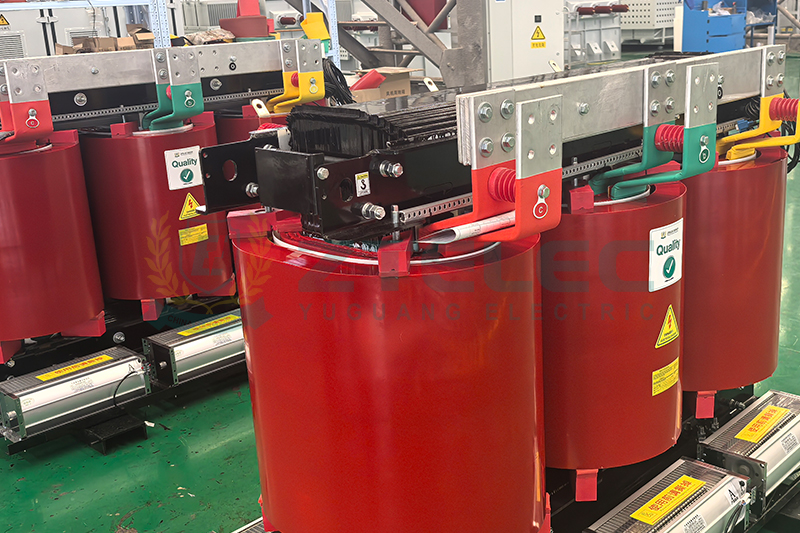
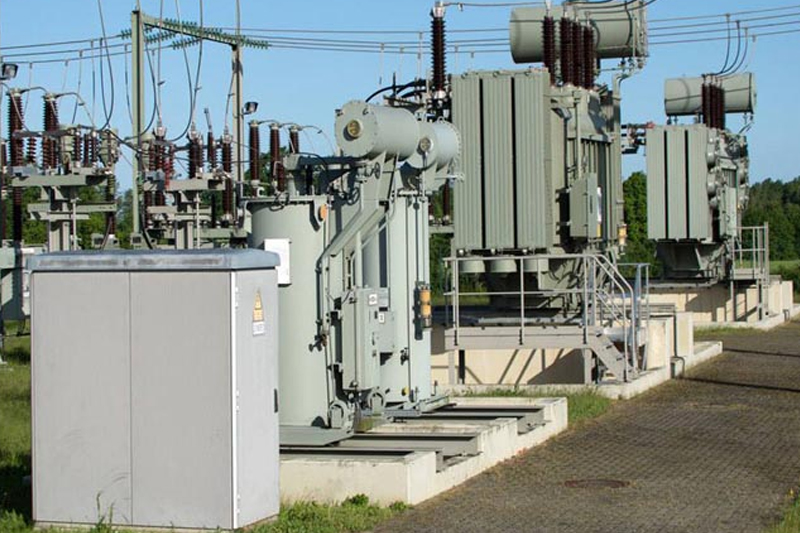
The transformer type should match the installation environment. Oil-immersed transformers provide excellent cooling performance and lower initial cost, making them suitable for outdoor installations and independent substations. Dry-type transformers offer superior fire safety and are widely preferred for shopping malls, office buildings, hospitals, schools, airports, and other occupied buildings.
Ingress protection should also be carefully considered. Outdoor compact substations generally require an enclosure rated at least IP33, while coastal regions, humid climates, or dusty industrial environments may require IP54 or higher protection.
Noise performance is another important consideration for substations located near residential communities, hotels, schools, or office buildings where environmental regulations impose strict sound limits.
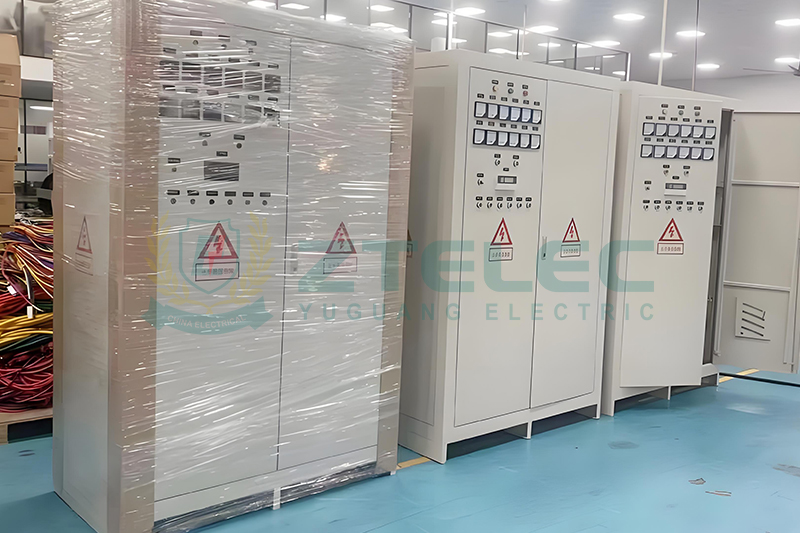
Modern compact substations increasingly incorporate intelligent monitoring systems capable of continuously supervising transformer temperature, winding condition, loading percentage, insulation performance, partial discharge activity, and power quality. These digital monitoring systems enable predictive maintenance, improve operational reliability, and reduce lifecycle maintenance costs.
Commercial developments rarely remain electrically static throughout their operating life. Retail tenants change, production lines expand, electric vehicle charging stations are added, and digital infrastructure continues to increase building power consumption.
Selecting a 500 kVA compact substation with sufficient spare feeder positions, flexible cable routing, scalable switchgear, and provisions for future transformer replacement can substantially reduce future upgrade costs while minimizing operational disruption.
Selecting the appropriate 500 kVA compact substation requires much more than matching transformer capacity to today's electrical demand. Accurate load calculation, appropriate operating margin, redundancy planning, lifecycle cost evaluation, equipment type, environmental conditions, and future expansion all influence the final decision.
For most medium-sized commercial buildings, hotels, office complexes, educational facilities, healthcare buildings, logistics centers, and light industrial plants, a properly engineered 500 kVA package substation provides an excellent balance of reliability, efficiency, investment cost, and future flexibility. By working with experienced transformer manufacturers and electrical engineers, project owners can ensure that the selected substation delivers dependable performance throughout its entire service life while avoiding unnecessary capital expenditure or future power limitations.

ZTELEC Yuguang Electric Technology, founded in 2014, builds on state-owned industrial expertise to deliver reliable power solutions worldwide.
Copyright © 2026.ztygelectric All rights reserved.