

As renewable energy investment continues to accelerate worldwide, the transformer has become one of the most critical components in photovoltaic (PV) power plants and wind farms. While solar inverters and wind turbines often receive the most attention, the step-up transformer is responsible for efficiently transmitting generated electricity to the medium-voltage collection network and ultimately the utility grid.
Among various capacity ratings, the 2000 kVA oil-immersed transformer has become one of the most widely adopted solutions for utility-scale solar farms and onshore wind projects. It offers an excellent balance between investment cost, operating efficiency, cooling performance, and long-term reliability. This guide explains why 2000 kVA oil-filled transformers remain the preferred choice for renewable energy developers and how to select the right configuration for different applications.
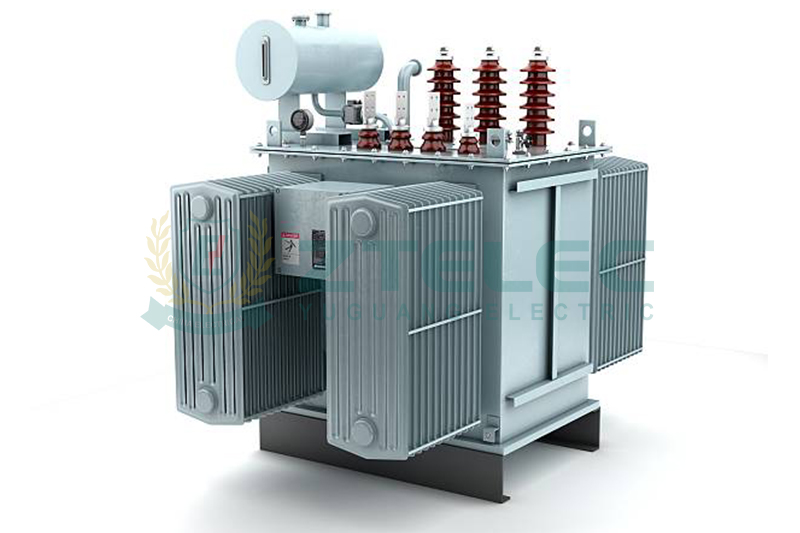
Despite the growing popularity of dry-type transformers in commercial buildings, oil-immersed transformers continue to dominate outdoor renewable energy applications for several practical reasons.
The first advantage is cost efficiency. For the same capacity and voltage class, oil-filled transformers generally cost considerably less than cast resin transformers, making them particularly attractive for utility-scale projects where dozens or even hundreds of transformers may be required.
Cooling performance is another important advantage. Transformer oil functions as both the insulation medium and cooling medium, providing significantly better heat dissipation than air. This allows manufacturers to design more compact transformers capable of carrying higher loads while maintaining stable operating temperatures.
After decades of field operation, oil-immersed transformers have also demonstrated excellent reliability under demanding outdoor conditions, making them the preferred technology for most large-scale solar and onshore wind installations.
The capacity of the step-up transformer should be selected according to inverter output power and the voltage level of the collector system.
Most utility-scale photovoltaic projects utilize transformers ranging from 1000 kVA to 3000 kVA with medium-voltage outputs between 11 kV and 33 kV. A 2000 kVA transformer sits within the optimal capacity range, allowing efficient operation without excessive oversizing during periods of reduced solar generation.
Typical voltage configurations include 0.8kV/33kV, 0.69kV/33kV, 11kV/33kV, and other customized designs depending on local grid requirements.
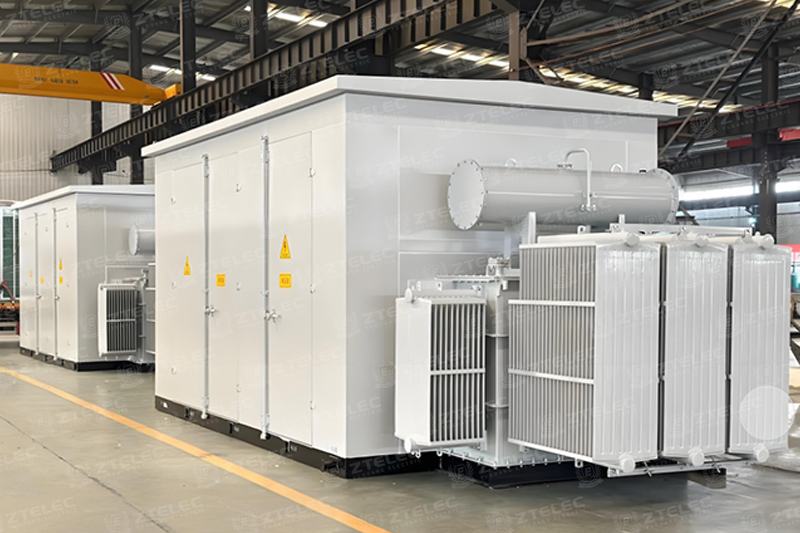
Most photovoltaic transformers employ either ONAN (Oil Natural Air Natural) or ONAF (Oil Natural Air Forced) cooling systems.
For standard 2000 kVA applications, ONAN cooling generally provides sufficient thermal performance while minimizing maintenance requirements and reducing auxiliary power consumption. In hotter climates or applications with higher loading, ONAF cooling can provide additional overload capability.
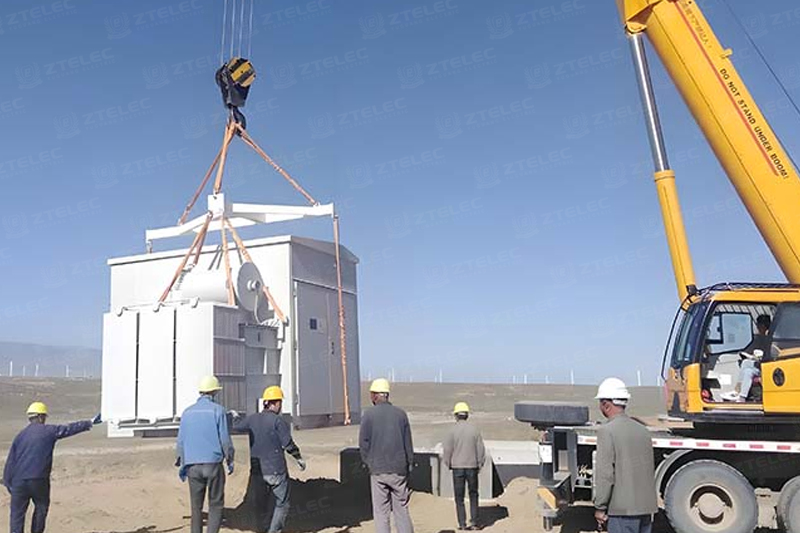
Large-scale solar power plants are frequently constructed in deserts, semi-arid regions, and open landscapes where high ambient temperatures, dust accumulation, strong ultraviolet radiation, and significant day-night temperature differences present continuous operational challenges.
Transformers designed for these environments should incorporate high-temperature insulation systems, UV-resistant coatings, anti-corrosion protection, and enclosure designs suitable for outdoor operation. Projects located in coastal regions should also consider enhanced corrosion protection against salt spray.
Wind turbine transformers are commonly available in standardized ratings such as 750 kVA, 1000 kVA, 1500 kVA, 2000 kVA, 2500 kVA, and 3000 kVA.
The 2000 kVA transformer is widely used for modern onshore wind turbines, typically stepping generator voltage up to medium-voltage collection systems operating between 13.8 kV and 35 kV.
Most onshore wind farms install the transformer close to each turbine, either inside the tower base or adjacent to the turbine foundation.
This localized step-up design minimizes low-voltage cable length, reduces transmission losses, lowers cable installation costs, and improves overall collection system efficiency.
Although oil-immersed transformers perform exceptionally well in onshore applications, offshore wind farms often require different solutions.
Due to limited installation space, high humidity, continuous salt exposure, and strict environmental protection requirements, offshore wind turbines frequently utilize dry-type transformers installed inside the nacelle instead of outdoor oil-filled units.
Therefore, the 2000 kVA oil-immersed transformer is primarily recommended for land-based wind power projects rather than offshore installations.
Wind power generation naturally fluctuates with changing wind conditions. Transformers must therefore withstand frequent load variations, mechanical stresses, and short-circuit forces without compromising insulation integrity or operational reliability.
Robust winding construction and high mechanical strength help ensure stable performance throughout decades of continuous operation.
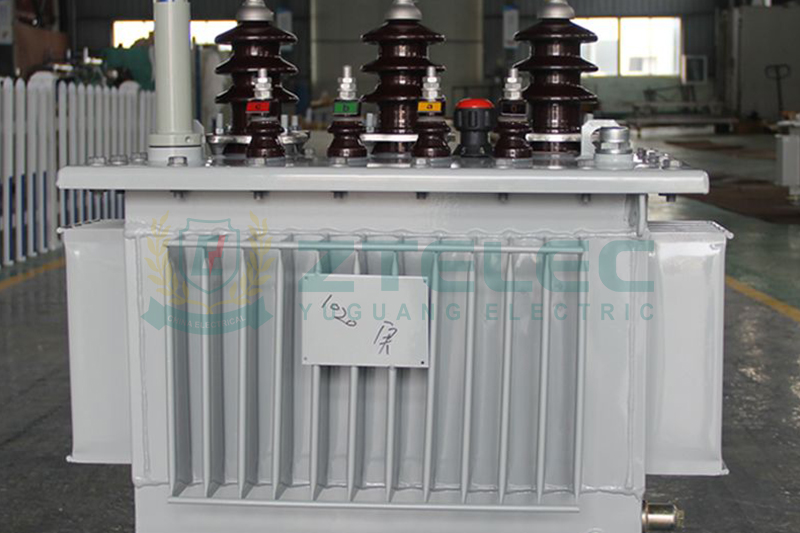
Renewable energy projects increasingly involve international engineering, procurement, and construction (EPC) contractors, requiring transformers to comply with multiple international standards.
Most utility-grade oil-immersed transformers are manufactured in accordance with IEC 60076, while projects in North America may require ANSI or IEEE compliance. Depending on the destination country, additional certifications such as CE, UL, CSA, or third-party inspection reports may also be required.
Confirming technical standards during the design phase helps avoid costly modifications and delays during grid connection approval.
Transformer sizing should be based on expected operating load rather than maximum theoretical generation capacity. Proper sizing improves efficiency while avoiding unnecessary capital investment.
Total cost of ownership should be evaluated instead of focusing solely on purchase price. High-efficiency transformers typically reduce energy losses over 20 to 30 years of operation, providing significant lifecycle savings for utility-scale renewable energy projects.
Environmental protection should be customized according to installation conditions. Desert solar projects require enhanced high-temperature and dust protection, while coastal wind farms demand superior anti-corrosion and salt-fog resistance.
Developers should clearly distinguish between onshore and offshore applications during equipment selection, ensuring the chosen transformer technology matches environmental and operational requirements.
Finally, technical specifications, certification requirements, and local utility standards should be confirmed before procurement to ensure smooth project execution and successful grid integration.
The 2000 kVA oil-immersed transformer continues to play a vital role in modern renewable energy infrastructure by combining excellent thermal performance, proven reliability, competitive investment costs, and long service life. It remains one of the preferred transformer capacities for utility-scale photovoltaic power plants and onshore wind farms around the world.
Successful transformer selection requires balancing electrical performance, cooling technology, environmental adaptability, compliance with international standards, and lifecycle economics. By carefully evaluating these technical factors alongside project-specific operating conditions, developers can maximize energy efficiency, reduce maintenance costs, and ensure reliable power delivery throughout the lifetime of their renewable energy investments.

ZTELEC Yuguang Electric Technology, founded in 2014, builds on state-owned industrial expertise to deliver reliable power solutions worldwide.
Copyright © 2026.ztygelectric All rights reserved.