

Driven by rapid industrialization and continuous infrastructure investment across Vietnam, Thailand, Indonesia, the Philippines, Malaysia, and other Southeast Asian countries, demand for high-quality power distribution equipment continues to grow. The 315 kVA cast resin dry-type transformer has become one of the preferred solutions for medium and low-voltage distribution systems thanks to its high safety, maintenance-free operation, environmental friendliness, and excellent performance in hot and humid climates.
Unlike conventional oil-immersed transformers, cast resin transformers require no insulating oil, eliminating the risks of oil leakage and fire hazards. They are ideal for installation inside buildings, public facilities, commercial complexes, hospitals, schools, airports, and data centers where fire safety and operational reliability are essential.
Successful export projects depend not only on product quality but also on professional export packaging, efficient international logistics, and comprehensive on-site technical support. This guide explains the complete delivery process for a 315 kVA cast resin transformer exported to Southeast Asia, covering packaging, transportation, installation, commissioning, and after-sales service.
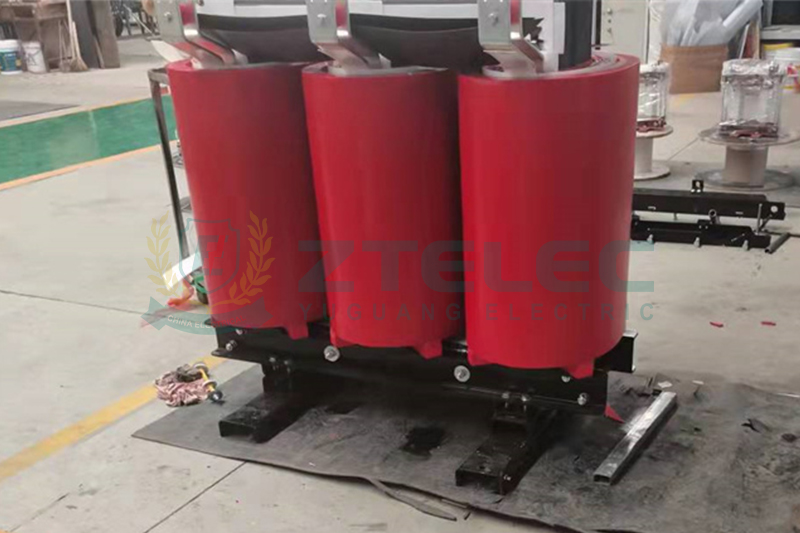
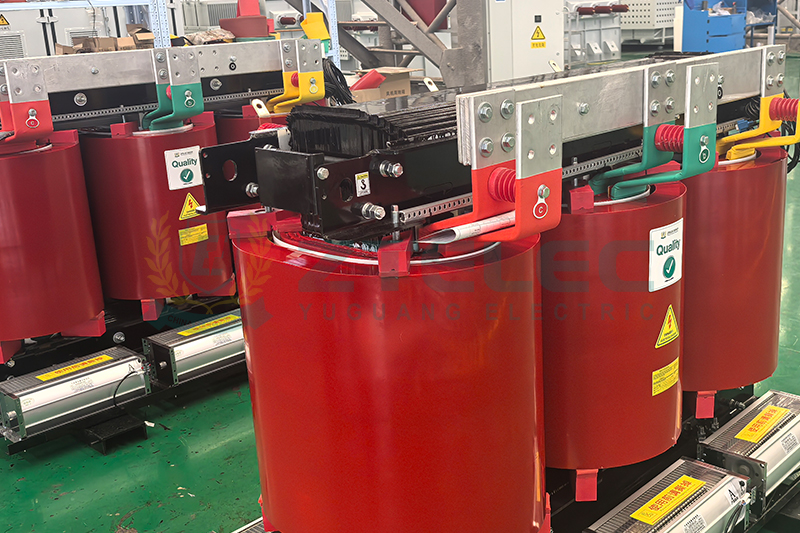
Most Southeast Asian countries experience tropical climates characterized by high temperatures, high humidity, and coastal salt-laden air. These environmental conditions can significantly affect conventional electrical equipment. Cast resin transformers utilize vacuum epoxy resin casting technology, completely encapsulating the windings to provide outstanding resistance against moisture, dust, condensation, and corrosion.
The 315 kVA rating is widely used for manufacturing plants, industrial workshops, office buildings, hospitals, hotels, educational facilities, shopping centers, and data centers, providing an excellent balance between power capacity, efficiency, and investment cost.
Designed and manufactured in accordance with IEC 60076-11, cast resin transformers provide numerous advantages.
Excellent resistance to humidity, mold, and contamination.
Self-extinguishing and fire-resistant insulation without oil leakage.
High mechanical strength and superior short-circuit withstand capability.
Low operating noise.
Minimal maintenance throughout the service life.
Outstanding performance in tropical and coastal environments.
315 kVA cast resin transformers are typically packed in export-grade fumigation-free plywood crates or heavy-duty steel frame packages.
Plywood crates offer an economical solution for standard container shipments, while steel-frame packaging provides additional structural protection for long-distance transportation, multiple cargo transfers, or large EPC projects.
The packaging design should also facilitate forklift handling, crane lifting, and secure container loading to ensure stability throughout transportation.
Ocean transportation normally lasts between 15 and 40 days, exposing equipment to high humidity and marine environments. Proper anti-corrosion protection is therefore essential.
All exposed metal surfaces should be coated with anti-rust oil or protected using corrosion-resistant film.
Moisture barrier film and sufficient desiccants should be placed inside the package.
Vacuum packaging is recommended for projects involving extended shipping periods.
International shipping marks such as "Keep Dry," "This Side Up," "Center of Gravity," and lifting instructions should be clearly displayed to ensure proper handling during transportation.
The transformer should be firmly bolted to the package base to prevent movement during shipping.
Shock-absorbing materials should be installed around the transformer to minimize vibration damage, especially protecting the cast resin windings, bushings, temperature controller, terminals, and accessories.
Most 315 kVA cast resin transformers exported to Southeast Asia are transported by sea using 20GP or 40GP containers.
Container shipping provides excellent cost efficiency, cargo security, and reliable international delivery, making it the preferred transportation method for global transformer exports.
For urgent projects, express ocean freight, multimodal transportation, or Ro-Ro shipping may be selected to shorten delivery schedules.
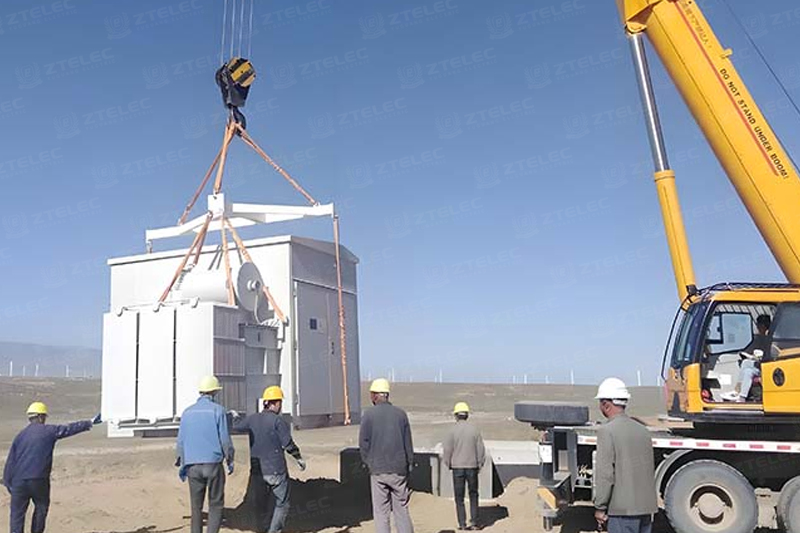
After arriving at the destination port, suitable flatbed trailers and lifting equipment should be arranged according to local road conditions and site accessibility.
Accurate documentation is essential for smooth customs clearance and timely project delivery.
The standard export package generally includes:
Commercial Invoice.
Packing List.
Bill of Lading.
Certificate of Origin.
Factory Test Report.
Product Quality Certificate.
IEC test reports or customer-required certification documents.
Some Southeast Asian countries require additional electrical product certifications before importation. Exporters should verify destination-country regulations before shipment to avoid customs delays.
For high-value equipment, shock indicators, tilt indicators, and temperature/humidity data loggers are recommended to monitor transportation conditions throughout the journey.
Upon arrival, the packaging condition and recorded transportation data should be inspected immediately. Any abnormalities should be documented with photographs and reported promptly to the carrier and insurance provider.
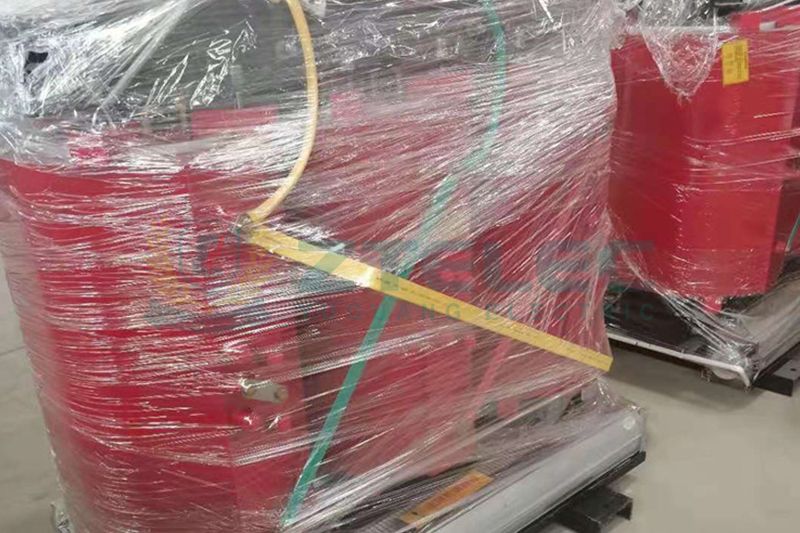
Upon delivery, the package should first be inspected for external damage, moisture exposure, or improper handling.
After unpacking, engineers should carefully examine the transformer body, cast resin windings, insulation components, and accessories for any transportation damage.
Insulation resistance testing, winding resistance measurements, and visual inspections should be completed before installation begins.
The transformer should be installed in a clean, dry, and well-ventilated location with sufficient cooling clearance.
The foundation must provide adequate load-bearing capacity and maintain proper levelness.
Grounding should be completed according to project specifications while maintaining sufficient maintenance clearance around the transformer.
Following installation, engineers should perform insulation testing, turns ratio verification, wiring inspection, temperature control system testing, and protection relay verification.
For transformers equipped with intelligent monitoring systems, communication modules should be integrated with SCADA or Energy Management Systems (EMS), enabling real-time operating data collection and predictive maintenance.
Many Southeast Asian projects involve multilingual communication and country-specific construction standards. Manufacturers with global project experience typically provide comprehensive localized services.
These services may include remote technical assistance, on-site installation supervision, commissioning support, operator training, spare parts supply, and preventive maintenance.
For large industrial facilities, data centers, or EPC projects, experienced field engineers with English or local language capabilities can significantly improve project execution efficiency while minimizing installation risks.
Successful international delivery requires much more than a high-quality transformer. Manufacturers should establish a complete supply chain covering engineering design, production, export packaging, logistics management, installation support, commissioning, and after-sales service.
Partnering with an experienced transformer manufacturer that complies with IEC standards, maintains strict quality control procedures, and has proven international project experience helps reduce logistics risks, accelerate project completion, and ensure long-term operational reliability.
The 315 kVA cast resin dry-type transformer has become an ideal solution for industrial, commercial, and infrastructure projects across Southeast Asia due to its superior moisture resistance, fire safety, and maintenance-free operation. By combining professional export packaging, reliable international logistics, standardized installation procedures, and comprehensive localized technical support, manufacturers can deliver complete lifecycle solutions that ensure safe transportation, rapid commissioning, and dependable long-term operation, providing customers with reliable, efficient, and sustainable power distribution systems.

ZTELEC Yuguang Electric Technology, founded in 2014, builds on state-owned industrial expertise to deliver reliable power solutions worldwide.
Copyright © 2026.ztygelectric All rights reserved.