

As urbanization accelerates and power distribution systems become more intelligent, engineers and project developers are increasingly focused on reducing installation space, lowering lifecycle costs, and improving grid reliability. One of the most important decisions in medium-voltage power distribution is choosing between an 11kV Ring Main Unit (RMU) and traditional medium-voltage switchgear.
Although both solutions are designed to control, protect, and isolate electrical distribution circuits, they differ significantly in terms of equipment footprint, installation complexity, maintenance requirements, scalability, and total cost of ownership. Selecting the right solution can directly impact project investment, operational efficiency, and long-term system reliability.
This guide compares 11kV RMUs and traditional switchgear, helping utilities, EPC contractors, industrial facilities, and commercial developers choose the most suitable medium-voltage distribution equipment.
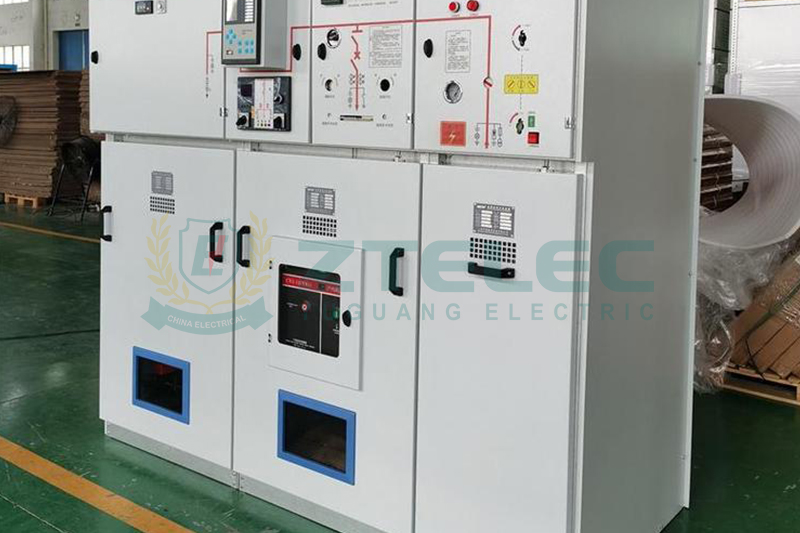
An 11kV Ring Main Unit (RMU) is a compact, factory-assembled medium-voltage switchgear designed for distribution networks operating at 11kV. Similar products are also available for 12kV, 24kV, and 36kV systems.
An RMU integrates load break switches, vacuum circuit breakers, fuse-switch combinations, busbars, and protection devices into a single enclosed unit. Depending on project requirements, modern RMUs may utilize SF₆ gas insulation, environmentally friendly dry air insulation, or vacuum insulation technology.
Because of their modular design, RMUs are widely used in ring networks, radial networks, and loop distribution systems, providing reliable switching, isolation, fault protection, and power continuity.
Typical applications include urban substations, commercial buildings, industrial parks, renewable energy plants, airports, rail transit systems, hospitals, and data centers.
Traditional switchgear refers to conventional panel-based medium-voltage switchgear assemblies built from individual functional units such as circuit breakers, disconnectors, protection relays, current transformers, voltage transformers, and busbars.
Unlike RMUs, traditional switchgear is usually customized according to a project's single-line diagram and installed as multiple interconnected panels inside a dedicated switchroom.
Traditional switchgear is available in both Air-Insulated Switchgear (AIS) and Gas-Insulated Switchgear (GIS) configurations. While these systems offer excellent flexibility for large substations and complex protection schemes, they generally require larger installation space, longer commissioning time, and higher construction costs.
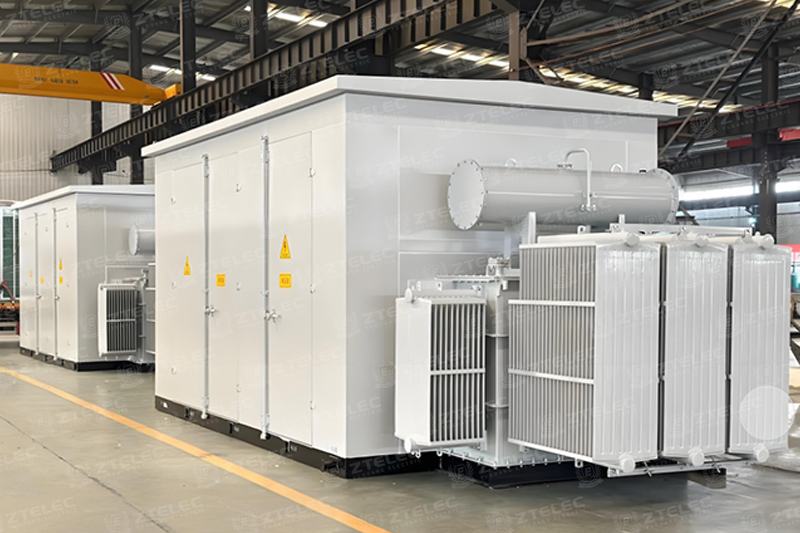
The biggest advantage of an 11kV RMU is its exceptionally compact footprint. Since all switching components are factory assembled and sealed inside a single enclosure, RMUs require significantly less installation space than conventional switchgear.
Compared with equivalent AIS switchgear, an RMU can typically reduce occupied floor space by 50% to 70%, making it ideal for projects where equipment rooms are limited.
This compact design is especially valuable for urban substations, underground distribution rooms, commercial buildings, shopping malls, hospitals, and retrofit projects where expansion space is unavailable.
Traditional switchgear installations often require larger switchrooms, reinforced floors, cable trenches, ventilation systems, and additional building infrastructure.
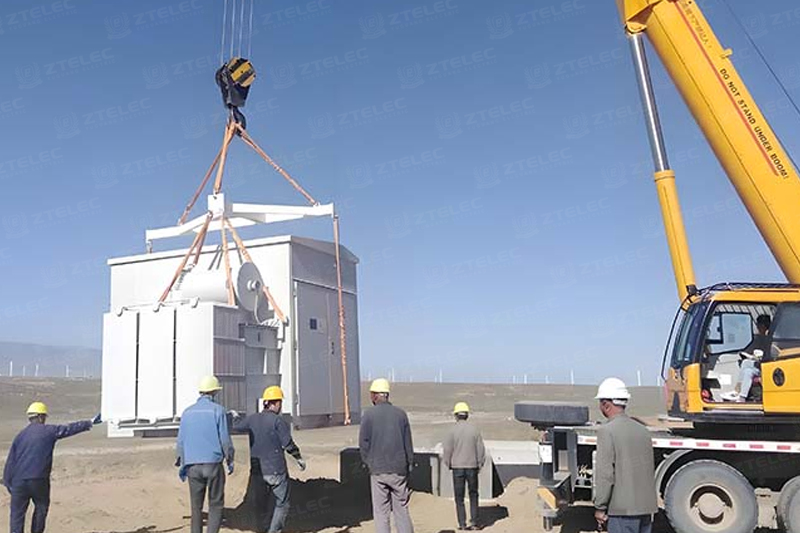
By comparison, RMUs usually require only a compact concrete foundation or pad-mounted base, substantially reducing civil engineering costs, construction time, and installation complexity.
A standard RMU integrates incoming feeders, outgoing feeders, transformer protection, and switching functions within one compact cabinet.
Traditional switchgear generally uses multiple independent panels connected in series, resulting in longer equipment rows and higher building costs.
For commercial developments where every square meter has economic value, RMUs offer a significant advantage.
Although the purchase price of a high-quality RMU may be similar to or slightly higher than an individual traditional switchgear panel, the overall project cost is often substantially lower.
Smaller equipment rooms, simplified foundations, reduced cable lengths, and faster installation collectively reduce the total installed cost of the electrical distribution system.
Factory-tested RMUs arrive on site fully assembled and require minimal wiring and commissioning.
Traditional switchgear generally demands extensive on-site assembly, cable termination, relay configuration, testing, and commissioning.
The shorter installation period offered by RMUs helps EPC contractors reduce labor costs while accelerating overall project completion.
Modern RMUs equipped with vacuum interrupters or sealed gas insulation require very little maintenance throughout their service life, which often exceeds 30 years.
Traditional air-insulated switchgear usually requires periodic cleaning, insulation inspection, lubrication, and replacement of aging components.
Reduced maintenance not only lowers operating expenses but also minimizes equipment downtime.
Because RMUs are fully sealed against dust, moisture, and pollution, they experience fewer environmental failures and require fewer maintenance interventions throughout their operating life.
Lower maintenance frequency, higher reliability, and improved operational availability contribute to a significantly lower total cost of ownership (TCO).
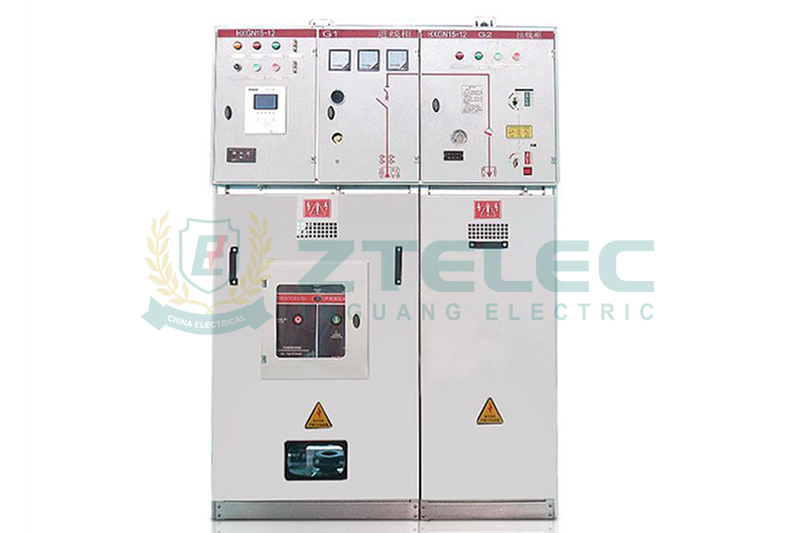
Modern RMUs are designed with fully enclosed live parts, internal arc classification, mechanical interlocking, and factory-tested safety mechanisms that significantly reduce operational risks.
Compared with older open-type or conventional AIS switchgear, RMUs provide a safer working environment during switching operations and maintenance.
RMUs are specifically designed for ring distribution networks, allowing electricity to be supplied from multiple directions.
When a fault occurs, damaged sections can be isolated quickly while maintaining power supply to unaffected feeders, greatly improving network reliability.
Modern RMUs can easily integrate with SCADA systems, RTUs, fault passage indicators, remote monitoring, and intelligent automation platforms.
This makes RMUs an ideal solution for smart grids, digital substations, and Industry 4.0 applications.
Sealed RMUs are highly resistant to humidity, dust, salt spray, pollution, and harsh outdoor environments.
They are particularly suitable for coastal regions, underground substations, mining facilities, renewable energy plants, and industrial environments with challenging operating conditions.
An 11kV Ring Main Unit is generally the preferred choice when installation space is limited, project schedules are tight, maintenance resources are limited, or high distribution reliability is required.
RMUs are particularly suitable for commercial buildings, industrial parks, urban substations, solar farms, wind farms, airports, hospitals, railway power systems, data centers, and smart city infrastructure.
Despite the many advantages of RMUs, traditional switchgear remains the preferred solution for certain large-scale applications.
Projects requiring multiple bus sections, complex protection coordination, high short-circuit ratings, or extensive future expansion may benefit from the greater customization offered by traditional switchgear.
Utilities operating existing conventional substations may also prefer maintaining equipment consistency for spare parts management and maintenance practices.
Before choosing between an RMU and traditional switchgear, project engineers should evaluate installation space, project budget, lifecycle costs, network configuration, expected future expansion, environmental conditions, protection requirements, automation functions, applicable utility standards, IEC 62271-200 compliance, manufacturer experience, and after-sales technical support.
For most modern medium-voltage distribution projects, the 11kV Ring Main Unit offers significant advantages over traditional switchgear in terms of installation space, construction cost, maintenance requirements, operational safety, and long-term reliability.
Its compact factory-sealed design reduces civil engineering work, shortens installation schedules, minimizes maintenance, and improves overall system availability. These benefits make RMUs the preferred choice for urban distribution networks, commercial developments, industrial facilities, renewable energy projects, and smart grid applications.
However, traditional switchgear continues to provide unmatched flexibility for large substations and highly customized power distribution systems. The optimal solution ultimately depends on project size, network architecture, available space, operational requirements, and future expansion plans.
Working with an experienced medium-voltage switchgear manufacturer during the early design stage ensures the selected solution delivers the best balance of safety, performance, reliability, and total lifecycle value for your power distribution project.

ZTELEC Yuguang Electric Technology, founded in 2014, builds on state-owned industrial expertise to deliver reliable power solutions worldwide.
Copyright © 2026.ztygelectric All rights reserved.