

As urbanization accelerates and electricity demand continues to increase, modern distribution networks require equipment that delivers high reliability, operational safety, compact dimensions, and minimal maintenance. Among medium-voltage distribution solutions, the 11kV Ring Main Unit (RMU) has become one of the most widely adopted switchgear systems for underground cable networks and compact substations.
Designed to maintain uninterrupted power supply while simplifying fault isolation and network maintenance, 11kV RMUs are extensively installed in residential communities, commercial complexes, industrial parks, hospitals, airports, rail transit systems, renewable energy projects, and data centers. Their compact design, modular configuration, and intelligent monitoring capabilities make them an essential component of modern smart grid infrastructure.
This guide explains how an 11kV Ring Main Unit works, its main components, technical specifications, applications, selection criteria, and why it remains the preferred medium-voltage switchgear solution for urban distribution networks worldwide.
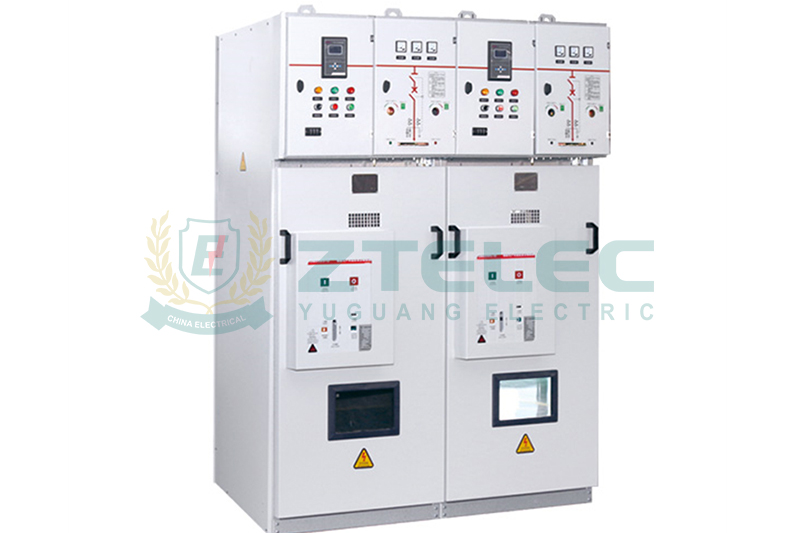
An 11kV Ring Main Unit (RMU) is a factory-assembled, metal-enclosed medium-voltage switchgear designed for ring distribution systems. Unlike traditional radial networks, ring networks connect multiple substations in a closed loop, allowing electricity to reach each load point from two independent directions.
This dual-source configuration significantly improves supply reliability. When a cable fault occurs, operators can isolate only the faulty section using the RMU while maintaining power to the remaining network from the opposite side of the ring. As a result, service interruptions are minimized and restoration time is dramatically reduced.
The 11kV voltage level is one of the most commonly used medium-voltage distribution standards globally, especially throughout Europe, the Middle East, Southeast Asia, Africa, Australia, and many developing power systems.
A typical Ring Main Unit integrates several functional modules inside a compact, sealed enclosure to ensure safe, reliable, and maintenance-friendly operation.
The incoming and outgoing ring switches form the primary distribution loop. These load break switches are designed to carry normal operating current while safely opening or closing circuits under load conditions, allowing electricity to flow in either direction around the ring network.
Each RMU typically includes a feeder dedicated to supplying a distribution transformer. Depending on system requirements, transformer protection may utilize high rupturing capacity (HRC) fuse-switch combinations or vacuum circuit breakers equipped with digital protection relays for enhanced fault protection and remote operation.
Modern Ring Main Units are available with several insulation technologies.
Traditional SF6 gas-insulated RMUs provide excellent dielectric performance, compact dimensions, and long-term reliability, making them one of the most widely used solutions for decades.
Air Insulated Switchgear (AIS) RMUs eliminate the use of greenhouse gases but generally require larger installation space.
The newest generation of environmentally friendly RMUs combines vacuum interrupters with solid insulation or clean-air insulation technologies. These SF6-free designs offer outstanding performance while meeting increasingly stringent environmental regulations and carbon reduction goals.
Urban substations are often installed in confined locations such as underground utility rooms, roadside kiosks, commercial building basements, or compact prefabricated substations. The integrated design of an RMU significantly reduces installation space compared with conventional medium-voltage switchgear.
The ring network architecture provides two independent power paths to each distribution transformer. If one cable fails, operators simply isolate the faulted section while maintaining power supply through the alternate path, dramatically improving service continuity and reducing outage duration.
Modern sealed RMUs require very little routine maintenance throughout their service life. Vacuum interrupters and sealed insulation systems eliminate many of the maintenance procedures associated with older oil-filled switchgear, reducing operating costs and improving long-term reliability.
Factory-sealed metal enclosures minimize exposure to energized components and greatly improve personnel safety. Mechanical and electrical interlocking systems prevent incorrect switching operations, helping eliminate operator errors during maintenance and fault isolation.
Most Ring Main Units feature modular construction, allowing additional feeder panels or ring ways to be added as the electrical network expands. This flexibility makes RMUs particularly suitable for phased urban development projects and continuously growing industrial parks.
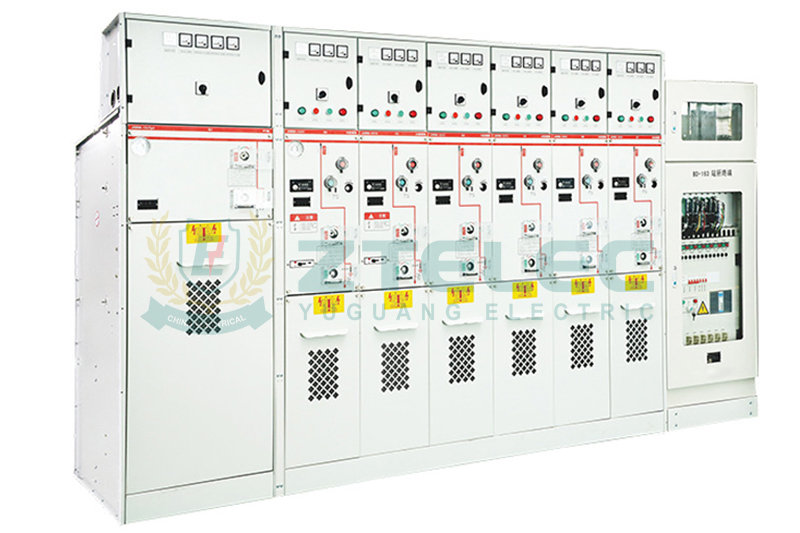
Because of their high reliability and compact design, 11kV RMUs are widely used in various medium-voltage distribution systems.
Typical applications include residential housing developments, commercial office buildings, shopping malls, hospitals, universities, airports, metro and railway stations, underground cable distribution systems, industrial manufacturing facilities, renewable energy plants, wind farms, solar photovoltaic projects, data centers, utility substations, mining operations, and smart city infrastructure.
Verify that the RMU matches the network voltage. Although 11kV is the most common distribution voltage, equipment rated for 12kV, 15kV, 24kV, and 36kV is also available depending on regional utility standards.
The load break switches and circuit breakers must safely withstand both normal operating current and the maximum prospective short-circuit current of the electrical system. Selecting adequate interrupting capacity is critical for equipment protection and operational safety.
Ring Main Units are commonly available in 2-way, 3-way, 4-way, and modular multi-way configurations. The required configuration depends on the number of transformer feeders, cable branches, and future expansion requirements.
Modern distribution networks increasingly require intelligent protection and automation. Buyers should evaluate whether the RMU supports digital protection relays, motorized operation, remote fault indication, SCADA communication, IEC 61850 compatibility, and smart grid integration.
Many countries are gradually restricting the use of SF6 gas due to its high global warming potential. For new infrastructure projects, SF6-free Ring Main Units utilizing vacuum interruption and environmentally friendly insulation technologies are becoming the preferred long-term solution.
High-quality RMUs should comply with internationally recognized standards such as IEC 62271-200, IEC 62271-1, IEC 62271-102, IEC 62271-103, and applicable local utility specifications to ensure safe and reliable operation.
Proper installation is essential to maximize equipment reliability and service life. During project planning, adequate space should be reserved for cable routing, ventilation, operation, and future maintenance access despite the RMU's compact footprint.
Cable termination and torque requirements specified by the manufacturer should be strictly followed, as improper cable installation remains one of the leading causes of early equipment failure.
Although modern Ring Main Units are largely maintenance-free, periodic inspections are still recommended to verify enclosure integrity, cable connections, gas pressure indicators (where applicable), mechanical interlocks, and operating mechanisms.
Utilities planning long-term asset management strategies should also consider future environmental regulations regarding SF6 and evaluate eco-friendly replacement technologies during new equipment procurement.
The rapid development of smart grids, distributed renewable generation, electric vehicle charging infrastructure, and digital substations is driving continuous innovation in Ring Main Unit technology.
Modern intelligent RMUs increasingly integrate IoT sensors, online condition monitoring, predictive maintenance software, digital fault recorders, cloud-based asset management platforms, and remote operation capabilities. These technologies enable utilities to improve network reliability while reducing maintenance costs and outage response times.
At the same time, SF6-free switchgear is becoming the industry's future direction. Vacuum interruption combined with clean-air insulation, solid dielectric insulation, and environmentally friendly gas mixtures offers a sustainable alternative without sacrificing performance or reliability.
The 11kV Ring Main Unit has become one of the most reliable and space-efficient medium-voltage switchgear solutions available for modern power distribution systems. Its ability to isolate faults quickly, maintain continuous power through ring network topology, and support intelligent grid automation makes it indispensable for today's rapidly expanding urban infrastructure.
Whether you are designing a residential development, upgrading a utility distribution network, building a renewable energy project, or constructing a smart industrial park, selecting the right 11kV RMU with appropriate voltage rating, protection scheme, intelligent control functions, and environmentally friendly insulation technology will significantly improve system reliability, reduce maintenance costs, and provide dependable power distribution for decades to come.

ZTELEC Yuguang Electric Technology, founded in 2014, builds on state-owned industrial expertise to deliver reliable power solutions worldwide.
Copyright © 2026.ztygelectric All rights reserved.