

As industrial facilities demand higher electrical reliability, improved fire safety, and lower operating costs, epoxy resin transformers have become one of the fastest-growing solutions in medium-voltage power distribution. Compared with conventional oil-filled transformers, cast resin dry-type transformers offer maintenance-free operation, superior environmental protection, and outstanding performance in indoor installations.
This case study analyzes the real-world performance of a 1250 KVA Epoxy Resin Transformer operating in a heavy industrial manufacturing facility. It includes technical specifications, operating data, efficiency comparisons, installation experience, lifecycle costs, and practical recommendations for engineers, EPC contractors, facility managers, and procurement professionals.
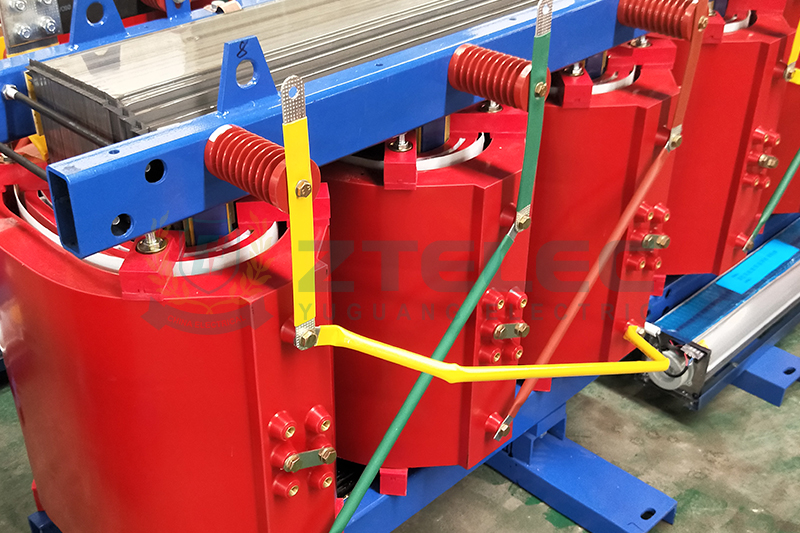
The 1250 KVA rating has become one of the most widely specified transformer capacities for factories, hospitals, commercial buildings, renewable energy projects, data centers, and utility distribution systems. It provides sufficient power capacity while maintaining excellent efficiency and a compact footprint.
Unlike oil-filled transformers, epoxy resin transformers use vacuum-cast epoxy insulation that completely encapsulates the windings. This design eliminates oil leakage risks, significantly improves fire resistance, and minimizes maintenance throughout the equipment lifecycle.
With increasingly strict fire safety regulations and sustainability requirements worldwide, cast resin transformers are replacing traditional liquid-filled units in many indoor and environmentally sensitive applications.
Project Type: Steel Manufacturing Plant Power Distribution Upgrade
Installation Location: Large industrial production facility operating under high humidity, elevated ambient temperatures, and heavy dust conditions.
Transformer Rating: 1250 KVA Cast Resin Dry Type Transformer
Voltage Ratio: 10kV / 0.4kV
Frequency: 50Hz
Connection Group: Dyn11
Cooling Method: AN (Natural Air Cooling)
Operation: Continuous 24-hour production
The project aimed to replace an aging oil-filled transformer with a safer, more reliable, and maintenance-free solution while improving overall energy efficiency.
The customer established several key objectives before equipment selection.
Improve operational reliability for continuous production.
Reduce lifecycle maintenance costs.
Eliminate transformer oil leakage and fire hazards.
Increase electrical efficiency.
Comply with IEC 60076-11 and GB/T 10228 standards.
Provide a transformer suitable for indoor installation.
| Parameter | Specification |
|---|---|
| Rated Capacity | 1250 KVA |
| Primary Voltage | 10 kV |
| Secondary Voltage | 400 V |
| Frequency | 50 Hz |
| Connection Group | Dyn11 |
| Cooling Method | AN |
| Insulation Class | Class F (155°C) |
| Temperature Rise | ≤100 K |
| Protection Level | IP20 / Optional IP54 |
| No-Load Loss | ≤1150 W |
| Load Loss | ≤12200 W |
| Efficiency | Up to 98.8% |
| Noise Level | ≤55 dB(A) |
| Insulation Material | Vacuum Cast Epoxy Resin |
| Core Material | High-Grade CRGO Silicon Steel |
| Winding Material | Copper |
After more than one year of uninterrupted industrial operation, the transformer demonstrated excellent stability under varying production loads.
| Performance Indicator | Measured Result |
|---|---|
| Average Operating Efficiency | 98.5% |
| Maximum Efficiency | 98.8% |
| Annual Energy Savings | Approximately 12,000 kWh |
| Unexpected Downtime | 0 Hours |
| Maintenance Cost | Nearly Zero |
| Insulation Performance | No Partial Discharge Detected |
| Fire Incidents | None |
The transformer maintained stable electrical performance even during peak production periods, with no significant increase in operating temperature or insulation degradation.
| Load | 1250 KVA Epoxy Resin Transformer | 1250 KVA Oil Filled Transformer |
|---|---|---|
| 25% | 98.2% | 97.5% |
| 50% | 98.8% | 98.1% |
| 75% | 98.7% | 98.0% |
| 100% | 98.5% | 97.8% |
Although the efficiency difference appears relatively small, continuous industrial operation magnifies these savings significantly over the equipment's service life.
The substation had limited floor space available. The compact dry-type transformer occupied approximately 20% less installation area than the equivalent oil-filled transformer, allowing easier integration into the existing electrical room.
Summer temperatures inside the production facility regularly exceeded 45°C. Engineers selected Class F insulation and optimized ventilation airflow, enabling reliable operation even under elevated ambient temperatures.
Steel manufacturing generates significant airborne dust. An IP54 enclosure effectively protected transformer windings while periodic cleaning of ventilation filters ensured adequate cooling performance.
Because the transformer contains no insulating oil, additional fire containment systems were unnecessary, simplifying project approval and reducing installation costs.
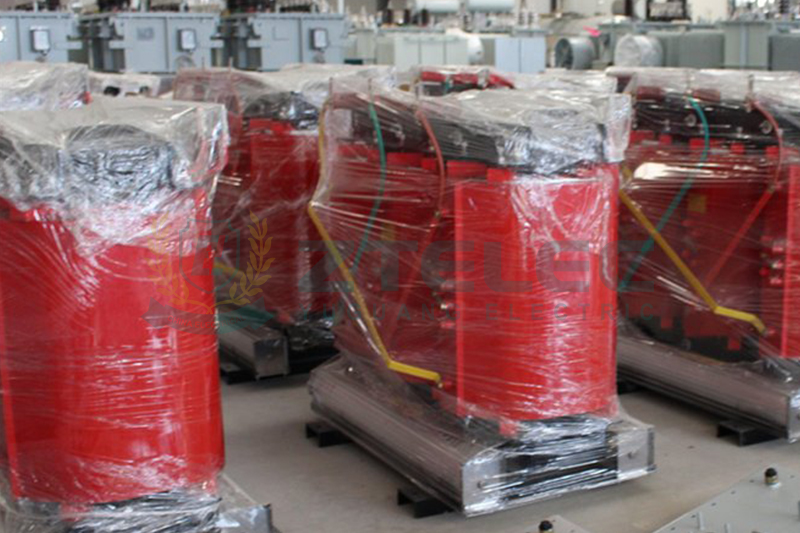
Although epoxy resin transformers typically have a higher equipment purchase price, the overall project economics favor dry-type technology over the long term.
| Cost Category | Epoxy Resin Transformer | Oil Filled Transformer |
|---|---|---|
| Initial Equipment Cost | Higher | Lower |
| Installation Cost | Lower | Higher |
| Fire Protection System | Usually Not Required | Often Required |
| Oil Maintenance | Not Required | Required |
| Routine Oil Testing | None | Periodic |
| Environmental Risk | Very Low | Moderate |
| Total Ownership Cost | Lower | Higher |
Over a typical 25-30 year operating life, the reduction in maintenance expenses, energy losses, insurance costs, and operational interruptions generally offsets the higher initial investment.
One of the primary reasons many industrial facilities choose epoxy resin transformers is their superior environmental performance.
There is no transformer oil, eliminating leakage and soil contamination risks.
The epoxy insulation system is self-extinguishing and highly fire resistant.
No explosion hazard associated with insulating oil.
Indoor installation is significantly safer.
Lower operating losses contribute to reduced carbon emissions.
Most structural materials can be recycled at the end of service life.
Routine maintenance requirements are substantially lower than those of oil-filled transformers.
| Maintenance Item | Recommended Interval |
|---|---|
| Visual Inspection | Every 6-12 Months |
| Connection Tightness | Annually |
| Dust Cleaning | As Required |
| Thermal Inspection | Annually |
| Oil Testing | Not Applicable |
| Cooling System Maintenance | Minimal |
When installed in a clean, well-ventilated electrical room, the transformer can operate for decades with only periodic inspections.
The 1250 KVA epoxy resin transformer is suitable for numerous commercial and industrial applications.
Steel plants.
Manufacturing facilities.
Hospitals.
Commercial buildings.
Shopping malls.
Data centers.
Airports.
Metro systems.
Universities.
Solar power plants.
Wind farms.
Water treatment facilities.
High-rise buildings.
The project demonstrated several important best practices for future transformer installations.
Select transformer capacity according to actual load requirements rather than oversizing.
Choose the appropriate enclosure protection level based on environmental conditions.
Provide sufficient ventilation to maximize cooling efficiency.
Install intelligent temperature monitoring systems for critical facilities.
Perform regular visual inspections even though maintenance requirements are minimal.
A reliable transformer manufacturer provides more than quality equipment. Professional suppliers offer complete engineering support, customized voltage ratings, impedance design, factory testing, international certifications, OEM manufacturing, and responsive after-sales service.
Whether serving industrial facilities, utility substations, renewable energy projects, or commercial infrastructure, a high-quality 1250 KVA epoxy resin transformer ensures long-term operational reliability, lower lifecycle costs, and excellent electrical performance.
This case study demonstrates that the 1250 KVA epoxy resin transformer delivers outstanding performance in demanding industrial environments. Compared with conventional oil-filled transformers, it offers higher efficiency, significantly reduced maintenance, improved fire safety, superior environmental protection, and lower total ownership costs.
As industries continue pursuing safer, greener, and more energy-efficient electrical infrastructure, cast resin transformers are becoming the preferred solution for medium-voltage distribution systems worldwide.
For projects requiring long-term reliability, minimal maintenance, and exceptional operational safety, investing in a high-quality 1250 KVA epoxy resin transformer provides measurable value throughout the entire lifecycle of the electrical system.

ZTELEC Yuguang Electric Technology, founded in 2014, builds on state-owned industrial expertise to deliver reliable power solutions worldwide.
Copyright © 2026.ztygelectric All rights reserved.